Could or Can: Meaning, and Usage Guide 2026
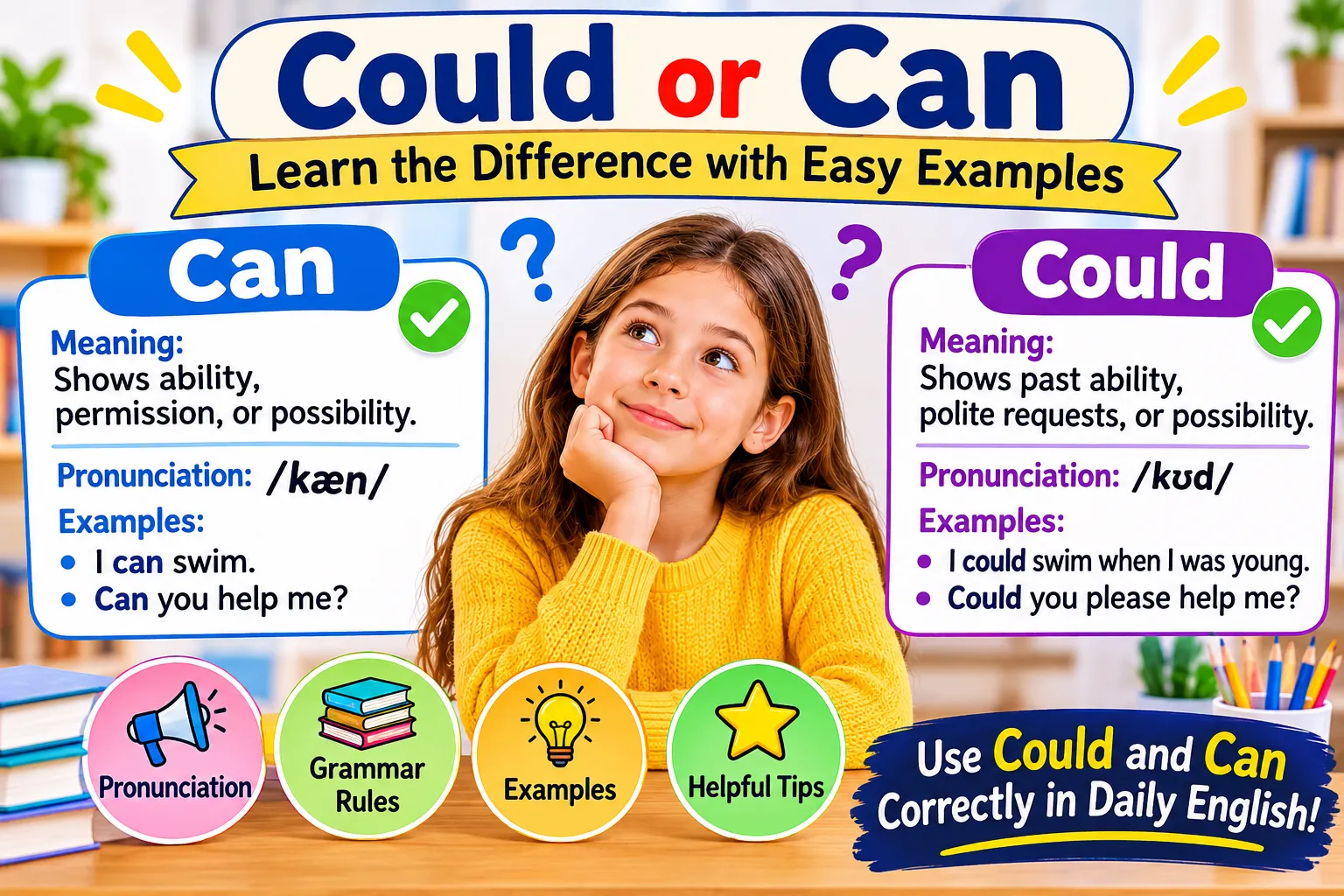
Can talks about what is possible or what someone is able to do. Could often talks about past ability, polite ...
Read moreComplete or Completed: How to Use Each Word Correctly 2026
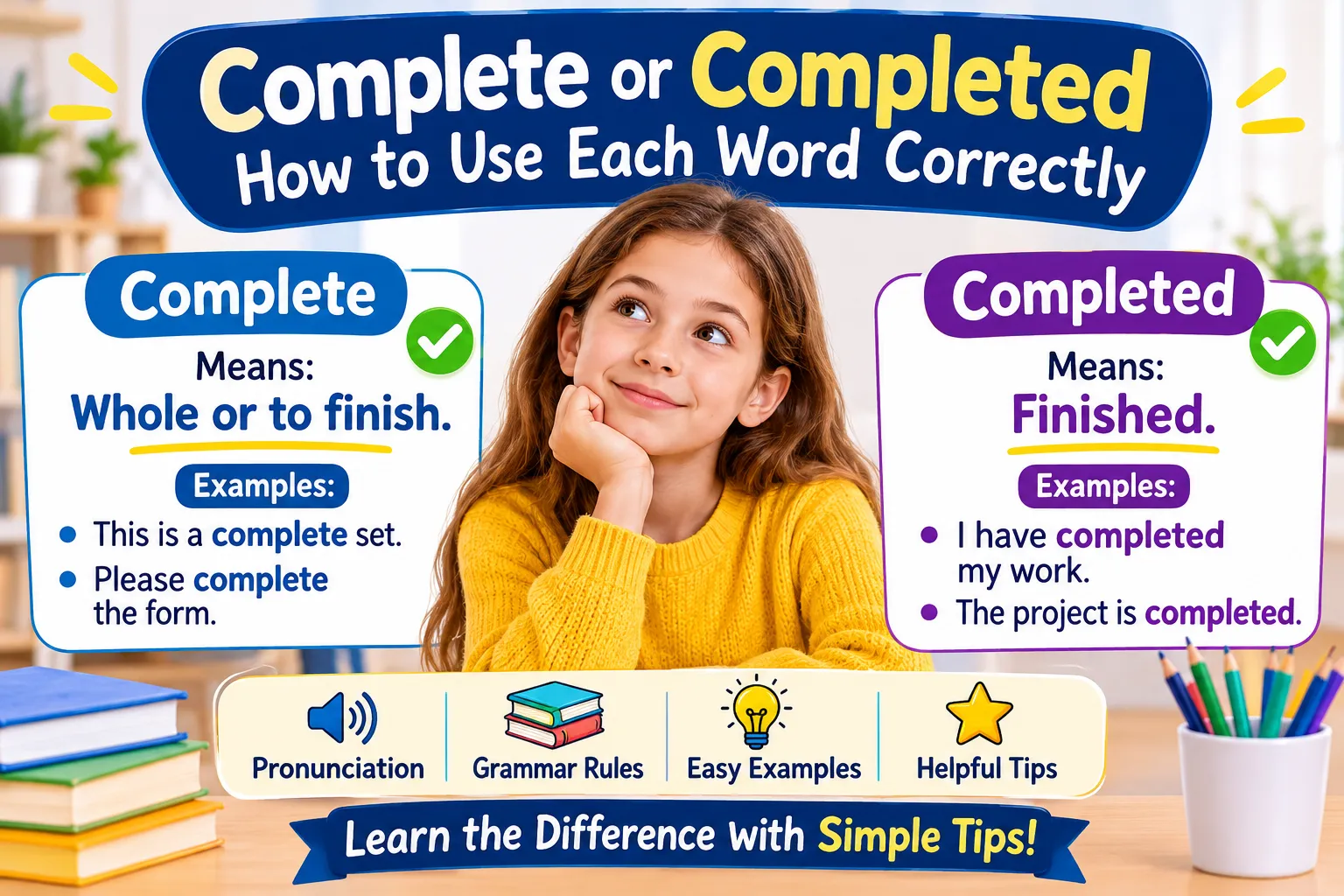
Complete means whole or finished, while completed means that an action or task has been finished. Imagine you are doing ...
Read moreMissus or Misses: How to Use Each Word Correctly 2026
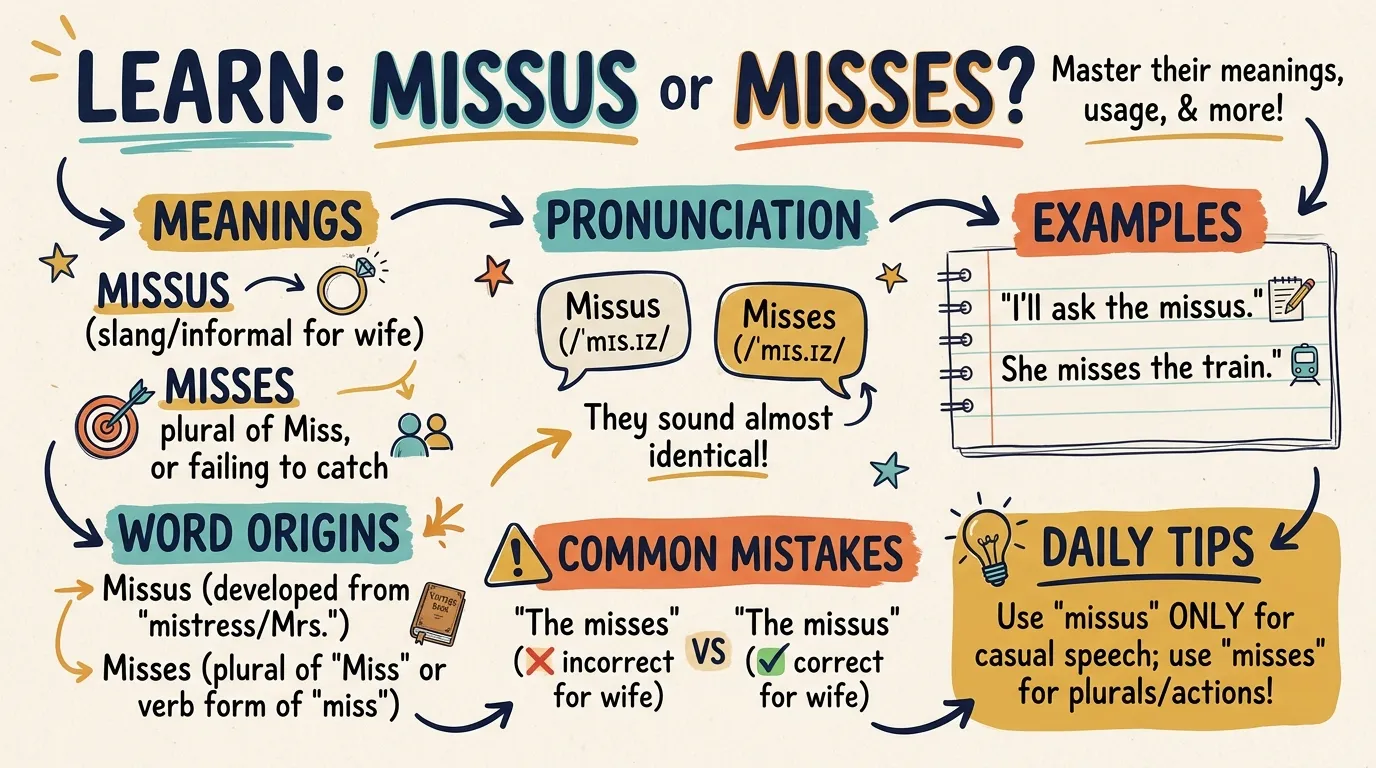
Missus is an informal word for a wife, while misses is a form of the verb miss or the plural ...
Read moreLeapt or Leaped: How Their Meanings and Uses Differ 2026
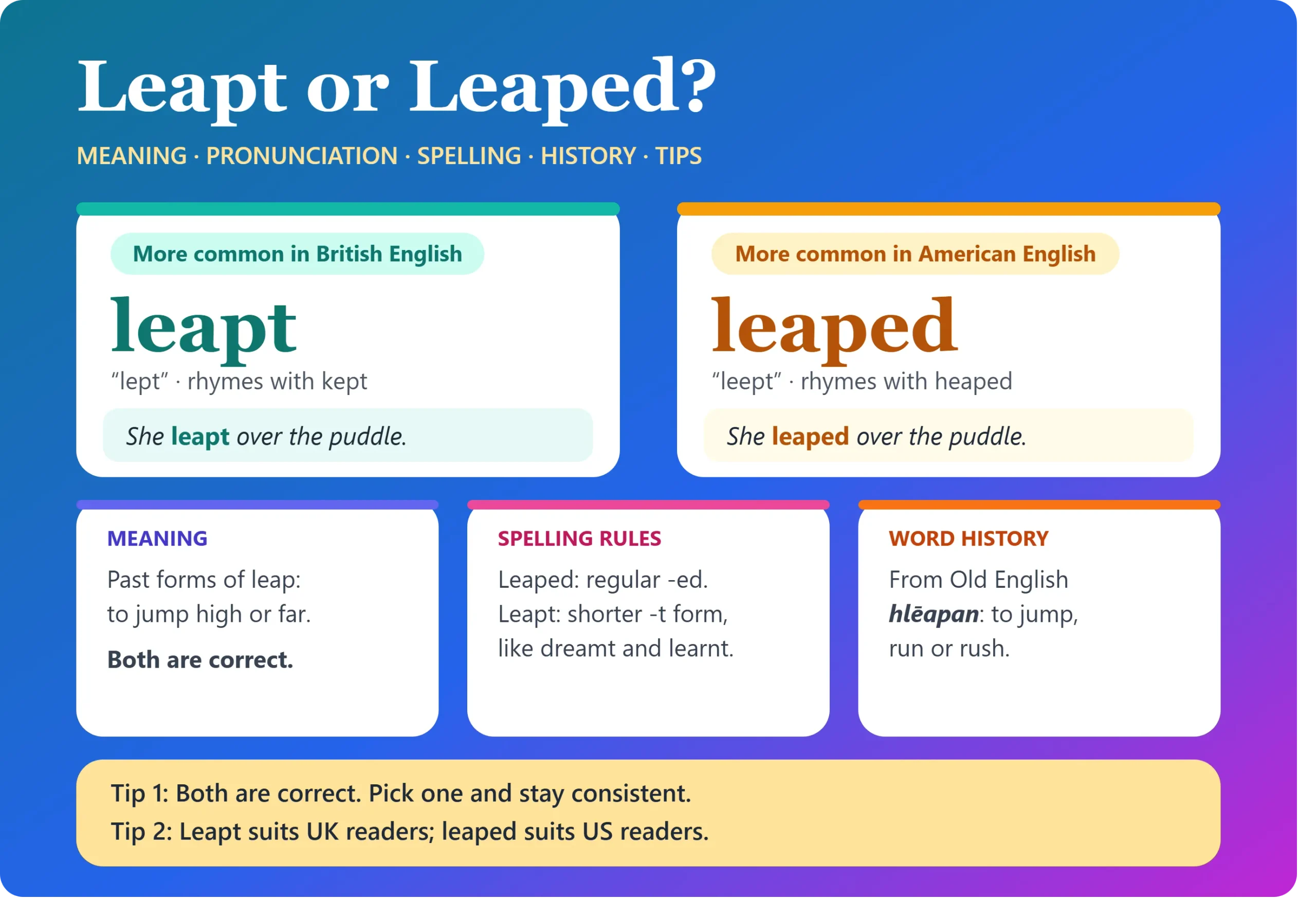
Leapt and leaped are both correct past forms of leap. Both mean jumped. The main difference is their spelling and ...
Read morePeaked or Piqued: How Are They Different? 2026
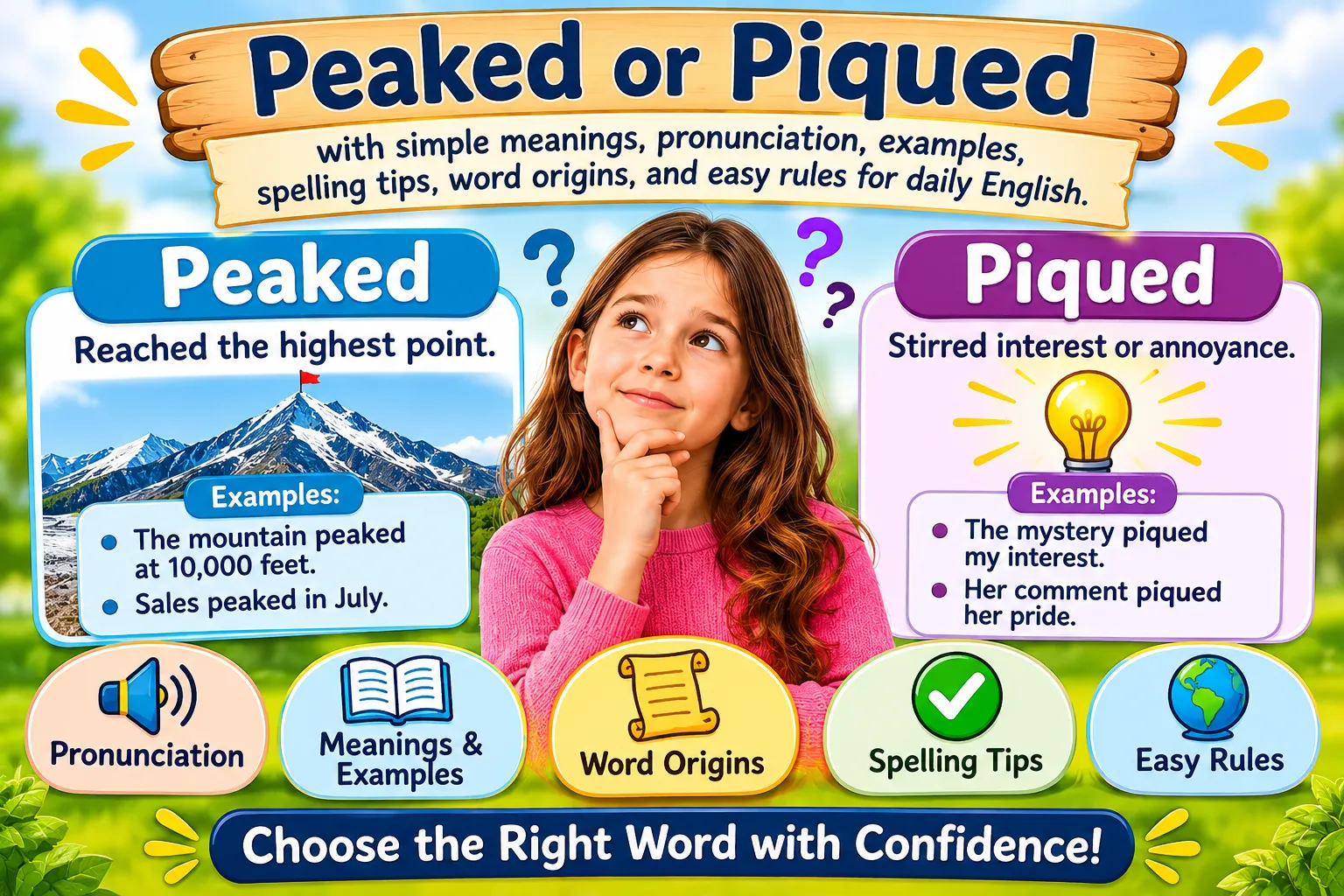
Peaked means reached the highest point, while piqued means sparked interest or caused annoyance. Imagine reading an exciting story. One ...
Read moreDissatisfied or Unsatisfied Spelling, Meaning, and Usage 2026
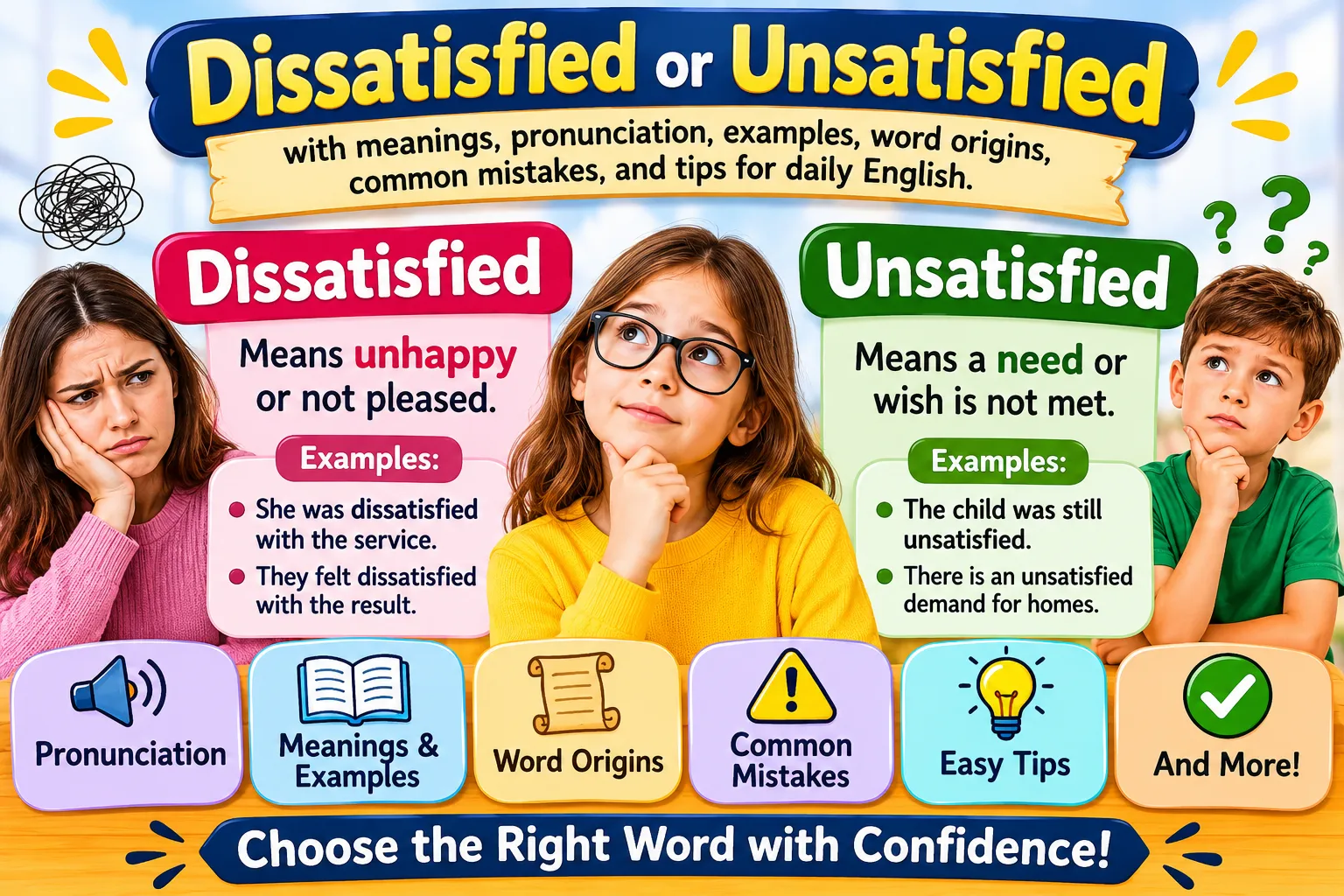
Dissatisfied means unhappy with something. Unsatisfied often means a need or wish has not been met. Imagine you visit a ...
Read morePedal or Peddle: Meaning, Difference, and Examples 2026
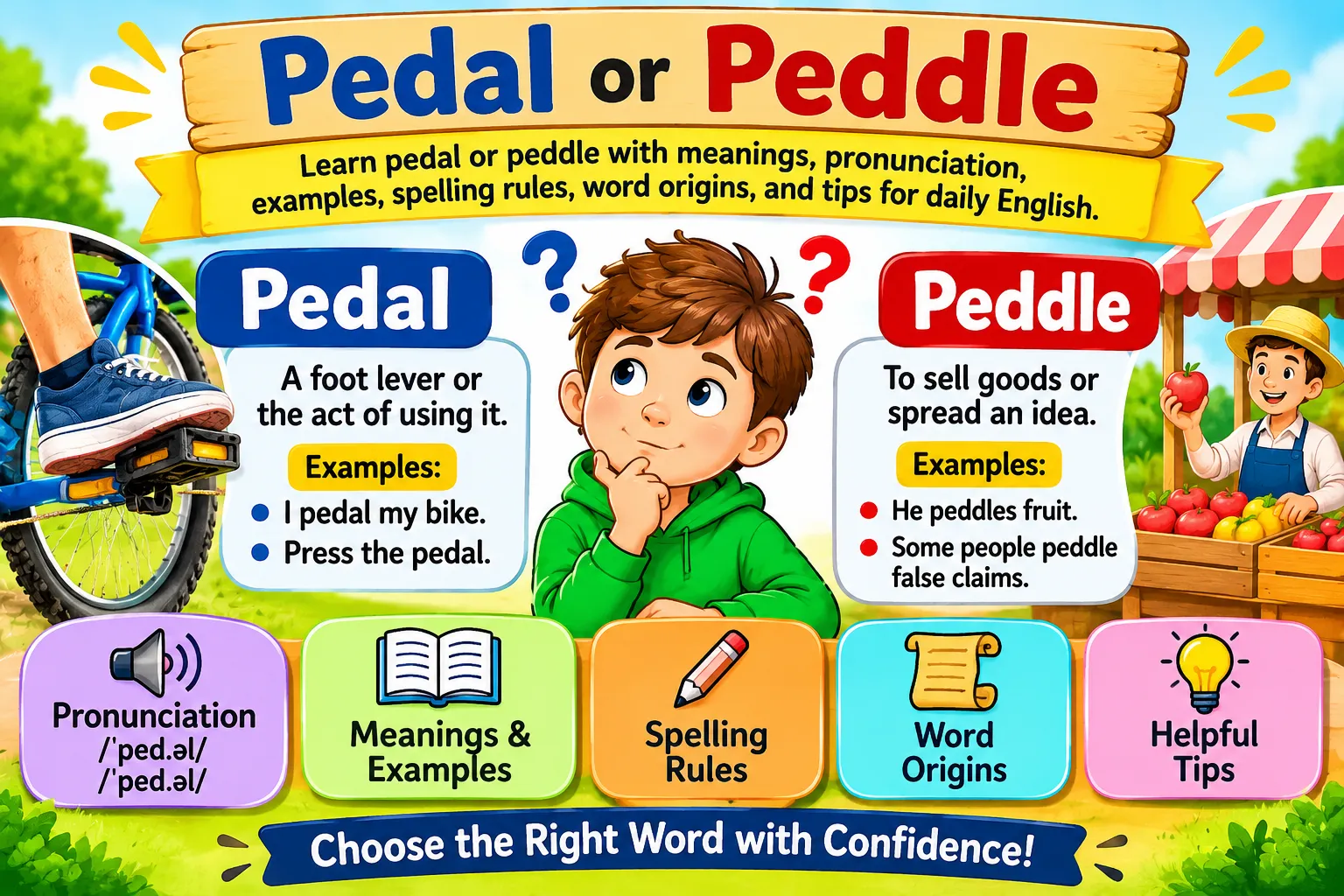
Pedal means a foot lever or the act of using it. Peddle means to sell goods or spread an idea. ...
Read moreChord or Cord: Difference With Explanation and Examples
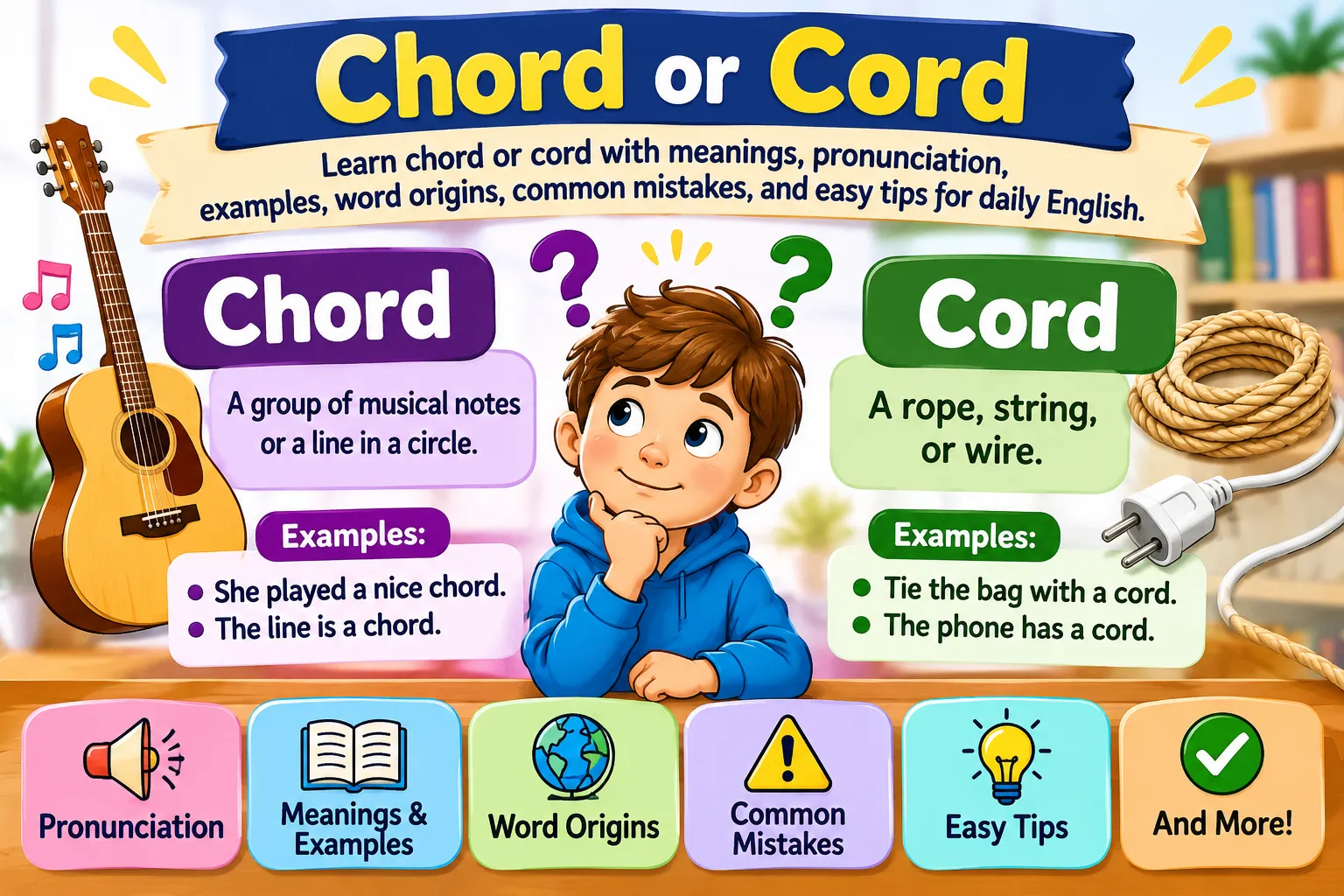
A chord is a group of musical notes. A cord is a thin rope, wire, or string. The main difference ...
Read moreExcept or Accept: Meaning, Pronunciation, and Examples
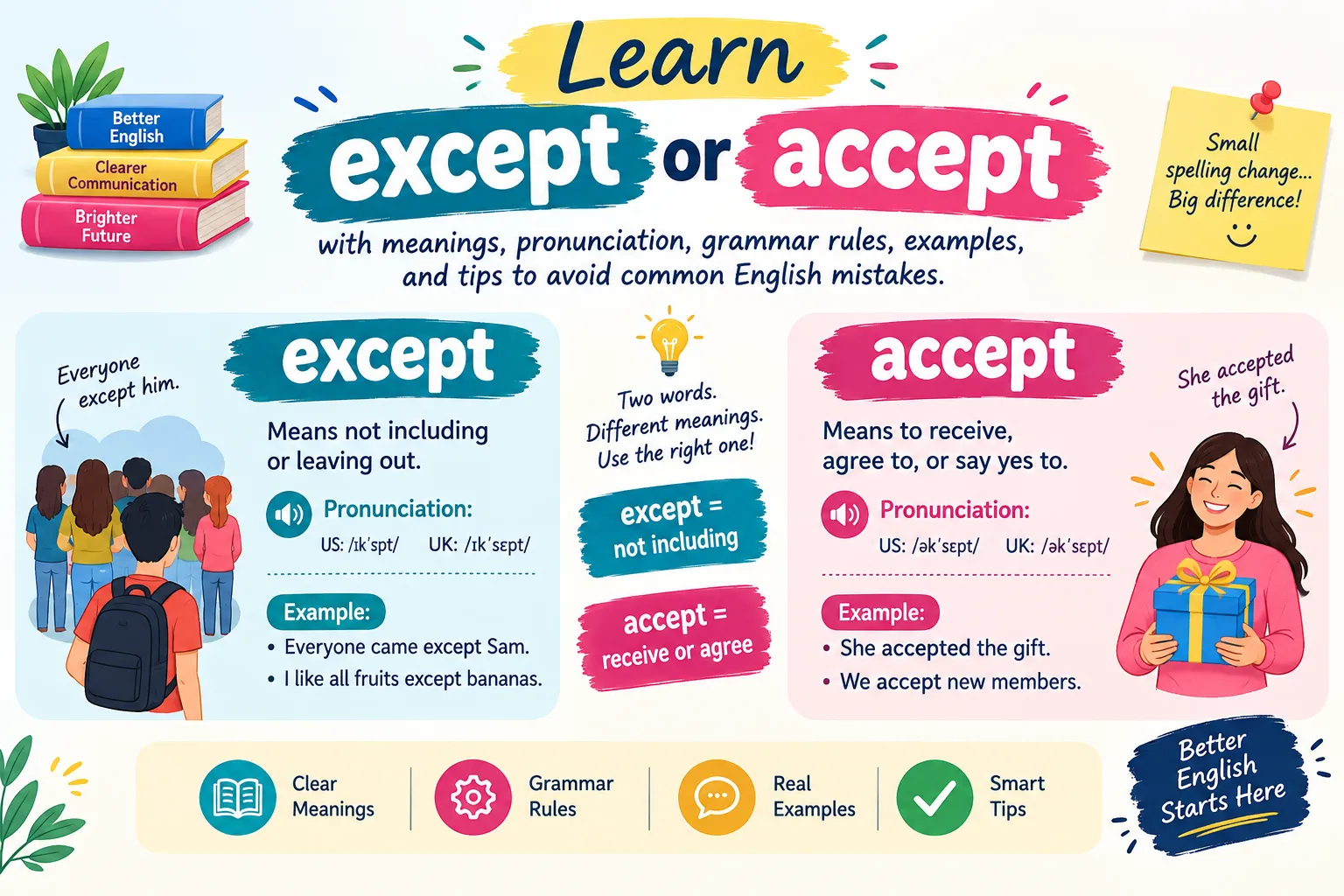
Except means “not including,” while accept means “to receive or agree to something.” Imagine your teacher gives homework to every ...
Read more