
Genuine means real, true, or honest. Ungenuine means false or not genuine, but it is rarely used.
Imagine buying a leather bag from a shop. The seller says it is real leather. You check the label and find that it is made from plastic. The bag is not genuine. Now think about a friend who always tells the truth. That friend is genuine because their words and actions are honest.
Both genuine and ungenuine are English words. However, they are not used in the same way. Genuine is common in daily speech and writing. Ungenuine is rare, even though Collins English Dictionary lists it as an adjective meaning “false.” Many people search for “genuine or ungenuine” because they want to know whether both words are correct. They may also wonder which word sounds natural in a sentence.
This guide explains their meanings, pronunciation, examples, and use. It also shows why genuine is usually the better choice.
Pronunciation of Genuine and Ungenuine
| Word | US pronunciation | UK pronunciation |
| Genuine | /ˈdʒen.ju.ɪn/ | /ˈdʒen.ju.ɪn/ |
| Ungenuine | Not commonly listed with a standard US pronunciation | /ʌnˈdʒen.jʊɪn/ |
Difference Between Genuine and Ungenuine
Both words relate to truth and honesty. However, genuine is common, while ungenuine is rare. The points below explain their main differences.
1. Meaning
Genuine means real, true, or honest. It describes something that is not fake.
Ungenuine means false or not genuine. It is a rare word.
Examples:
- This shop sells genuine leather bags.
- She showed genuine care for her friend.
- His smile seemed ungenuine.
- The buyer thought the offer was ungenuine.
2. Common Use
People use genuine in daily speech, emails, and formal writing.
People use ungenuine much less often. Many writers choose fake, false, or insincere instead.
Examples:
- I received a genuine gift from my friend.
- The company sells genuine products.
- His praise sounded ungenuine.
- The customer felt the seller was being ungenuine.
3. Use for People
Genuine can describe a person who is honest and kind.
Ungenuine can describe a person who seems false or not sincere. However, insincere is more common.
Examples:
- Sara is a genuine person.
- He gave me genuine advice.
- His friendly words seemed ungenuine.
- The manager’s smile felt ungenuine.
4. Use for Feelings
Genuine describes real feelings that are not forced.
Ungenuine can describe feelings that seem false. The phrase not genuine is often clearer.
Examples:
- She showed genuine happiness.
- His apology sounded genuine.
- Her sadness seemed ungenuine.
- The actor’s smile looked ungenuine.
5. Use for Products
Genuine is common when talking about real products.
Ungenuine may describe a fake product, but fake or counterfeit is clearer.
Examples:
- This shop sells genuine shoes.
- I bought a genuine phone charger.
- The customer returned the ungenuine watch.
- The shop was selling ungenuine bags.
6. Use in Formal Writing
Genuine is suitable for reports, letters, and business writing.
Ungenuine is rare and may sound unusual. Use not genuine or false when they fit the meaning.
Examples:
- The report shows genuine concern.
- We received a genuine complaint.
- The claim was not genuine.
- The company rejected the false document.
7. Tone
Genuine often gives a positive meaning. It can show honesty, trust, and care.
Ungenuine gives a negative meaning. It suggests that something is false or not sincere.
Examples:
- She has a genuine interest in learning.
- His support was genuine.
- The offer seemed ungenuine.
- His words did not feel genuine.
8. Word Formation
Genuine is the main word. It can form other words, such as genuinely and genuineness.
Ungenuine begins with the prefix un-. This prefix often means “not.”
Examples:
- She genuinely cares about her family.
- I trust the genuineness of his promise.
- His kindness seemed ungenuine.
- The message felt ungenuine.
9. Better Alternatives
Genuine has many common alternatives. The best choice depends on the sentence.
Ungenuine also has alternatives. These words often sound more natural.
Examples:
- This is a genuine painting.
- Her feelings are sincere.
- The bag is fake.
- His apology seemed insincere.
10. Natural English Use
Genuine sounds natural in most English settings.
Ungenuine is a real but uncommon word. Many readers may find not genuine easier to understand.
Examples:
- Is this a genuine product?
- He made a genuine effort.
- The product is not genuine.
- Her smile did not seem sincere.
You May Also Like https://orchoice.com/envision-or-invision/
Nature and Behaviour of Genuine and Ungenuine
Nature of Genuine
Genuine is an adjective. It describes people, things, feelings, and actions.
It can mean:
- Real and not fake.
- Honest and not forced.
- True and not copied.
- Original and not false.
For example, a genuine watch is real. A genuine friend is honest and caring.
Nature of Ungenuine
Ungenuine is also an adjective. It means false or not genuine.
However, it is not common in everyday English. Many people use these words instead:
- Fake
- False
- Insincere
- Artificial
- Not genuine
For example, you can say, “His apology seemed insincere.” This sounds more natural than “His apology seemed ungenuine.”
Why People Get Confused About Genuine and Ungenuine
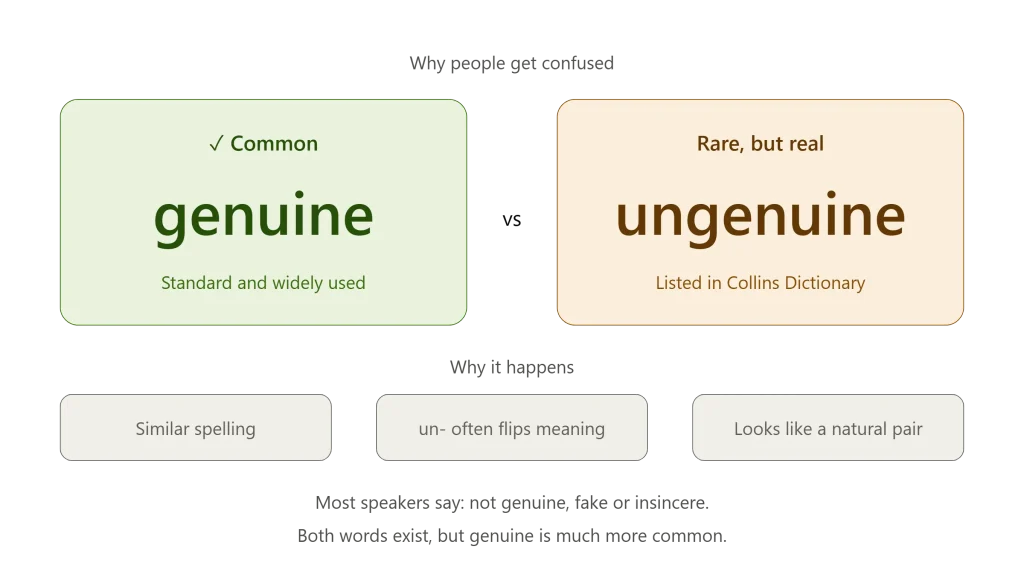
People often get confused because both words have a similar spelling. The prefix un- also makes ungenuine look like a natural opposite of genuine.
In English, un- often changes a word to its opposite. For example, happy becomes unhappy. This pattern can make people think ungenuine is common.
The word is listed in Collins English Dictionary. So, it is not simply a spelling mistake. However, it is rare. Most speakers use not genuine, fake, or insincere.
The main point is simple: both words exist, but genuine is much more common.
Comparison Table
| Feature | Genuine | Ungenuine |
| Part of speech | Adjective | Adjective |
| Main meaning | Real, true, or honest | False or not genuine |
| Word type | Common word | Rare word |
| Tone | Often positive | Negative |
| Use for people | Honest and sincere | False or not sincere |
| Use for products | Real and original | Not real or not authentic |
| Use for feelings | True and honest | False or forced |
| Daily use | Very common | Uncommon |
| Formal writing | Natural choice | Often sounds unusual |
| Common alternatives | Real, true, sincere | Fake, false, insincere |
Similarity: Both words describe whether something is real or false. They can relate to people, feelings, and things.
The Origin of Genuine and Ungenuine
The word genuine first appeared in English in the late 1500s. It came from the Latin word genuinus. This Latin word meant natural, native, or inborn.
Over time, genuine gained the meaning of real and authentic. Today, it can describe a real product, an honest person, or a true feeling.
The word ungenuine uses the prefix un- with genuine. The prefix often means “not.” This gives the word the meaning “not genuine.”
The two words have a clear link in their structure. However, their use is not equal. Genuine is common, while ungenuine is rare.
British vs American English
There is no main spelling difference between British and American English for these words. Both use genuine and ungenuine.
The main difference is how often people use them. Genuine is common in both forms of English. Ungenuine is rare in both.
| Use | British English | American English |
| Genuine spelling | Genuine | Genuine |
| Ungenuine spelling | Ungenuine | Ungenuine |
| Common word | Genuine | Genuine |
| Natural opposite | Not genuine, fake, false | Not genuine, fake, false |
British English examples:
- This shop sells genuine leather.
- Her concern was genuine.
American English examples:
- I bought a genuine watch.
- His interest in the job was genuine.
The same spelling and basic rules apply in both countries.
Which One Should You Use?
Use genuine when you mean real, true, or honest. It is the normal choice in the United States, the United Kingdom, and other English-speaking places.
Use ungenuine only when you have a clear reason to use this rare word. Most readers will understand not genuine more easily.
Here is a simple guide:
- US English: Use genuine. Use fake or not genuine for the opposite.
- UK English: Use genuine. Use false, fake, or not genuine when needed.
- Global English: Choose genuine for the positive meaning. Choose a common opposite for the negative meaning.
For schoolwork, emails, reports, and website content, clear and common words are best.
Common Mistakes
Here are some mistakes to avoid.
| Mistake | Better choice |
| This is a ungenuine product. | This is not a genuine product. |
| She is an ungenuine friend. | She is an insincere friend. |
| His smile was not genuin. | His smile was not genuine. |
| I genuinely like this fake item. | I do not genuinely like this item. |
| The bag is genuin. | The bag is genuine. |
| His apology was ungenuine. | His apology was insincere. |
Remember these tips:
- Genuine is the common spelling.
- Ungenuine is a real but rare word.
- Do not write genuin.
- Use fake for a false product.
- Use insincere for false feelings or words.
Everyday Usage Examples
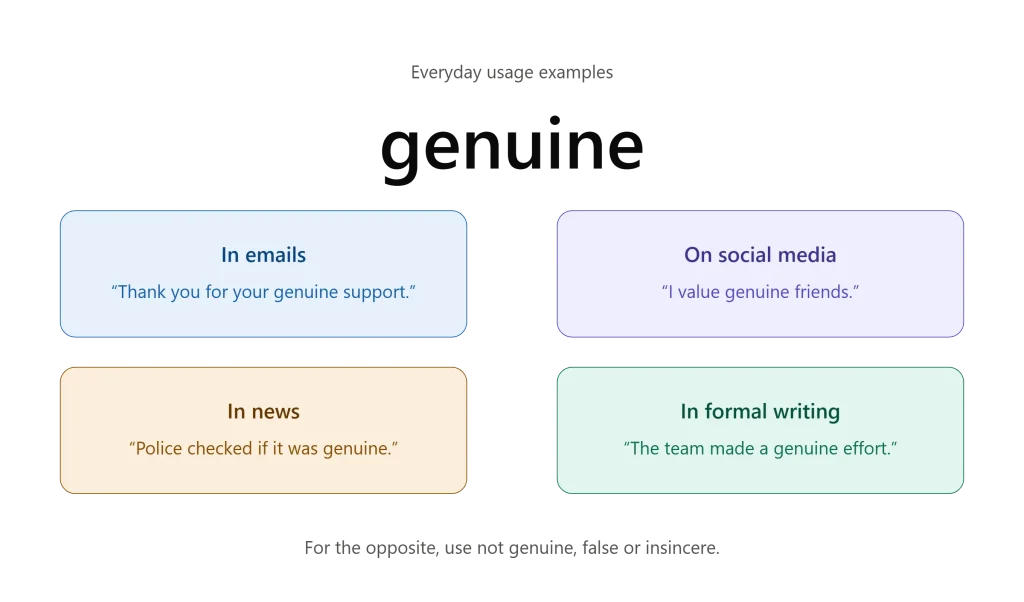
1. In Emails
You can use genuine in work and personal emails.
- Thank you for your genuine support.
- I have a genuine interest in this role.
For the opposite meaning, use a clear phrase:
- The offer does not seem genuine.
- I am not sure the message is real.
2. On Social Media
People often use genuine when talking about trust and friendship.
- I value genuine friends.
- Real care is better than fake praise.
3. In News
News reports may use genuine when checking facts or products.
- Police checked whether the document was genuine.
- The company warned people about fake products.
4. In Formal Writing
Genuine works well in reports and official letters.
- The team made a genuine effort.
- The buyer asked for proof that the item was genuine.
In formal writing, use not genuine, false, or insincere instead of ungenuine when one of these words fits.
Usage Trends
Genuine is widely used in modern English. People use it to talk about real products, honest people, and true feelings.
Ungenuine is much less common. Collins lists the word, but it is not a usual choice in daily speech.
There is no need to use ungenuine just because it looks like the opposite of genuine. English speakers often choose a phrase such as not genuine instead.
For clear writing, choose words that most readers know. This helps people understand your message without stopping to think about an unusual word.
Metaphors and Similes
Genuine and ungenuine can help describe people and feelings in a figurative way.
Genuine
- A genuine heart: A person who cares and tells the truth.
- A genuine smile: A smile that shows real happiness.
- Like a clear window: A genuine person does not hide their true feelings.
Examples:
- Her genuine heart made people trust her.
- His smile was like a clear window into his joy.
Ungenuine
- A painted smile: A smile that hides true feelings.
- A false mask: A way of acting that hides the truth.
Examples:
- His praise felt like a painted smile.
- Her kind words seemed like a false mask.
These are creative descriptions. They are not fixed dictionary meanings.
Connotative Meaning
A word can carry a feeling as well as a meaning. This feeling is called its connotation.
Positive Tone
Genuine often has a positive tone. It can show trust, care, and honesty.
Examples:
- She gave me genuine support.
- He is a genuine friend.
Negative Tone
Ungenuine has a negative tone. It suggests that something is false or not sincere.
Examples:
- His words seemed ungenuine.
- The offer did not feel genuine.
Neutral Tone
Genuine can also be neutral. It can simply tell us that an item is real.
Examples:
- The shop checked the genuine gold.
- The letter was a genuine copy of the record.
Idioms and Proverbs
The word genuine appears in a common English expression.
The Genuine Article
Meaning: The real thing, not a copy or fake.
Examples:
- This is the genuine article, not a copy.
- The shop sells the genuine article.
Come Across as Genuine
Meaning: To seem honest and real.
Examples:
- She comes across as genuine.
- His words came across as genuine.
There are no widely known standard idioms or proverbs built around ungenuine. Use common phrases such as fake, not real, or insincere instead.
Literature and Movies
Stories and films often explore the difference between what is real and what is false. This idea connects with the meanings of genuine and ungenuine.
Literature
The Adventures of Pinocchio — Carlo Collodi, 1883, Italy
This famous story follows a wooden puppet who wants to become a real boy. It explores truth, lies, and what it means to be real. These ideas connect with the meaning of genuine.
Movies
The Truman Show — 1998, United States
This film follows a man who learns that his life is part of a TV show. It explores real life, false appearances, and truth. These ideas help explain the difference between genuine and fake things.
These works are examples of related themes. They are not proof that the word ungenuine appears in them.
Why This Difference Matters
Knowing the difference helps you choose clear words. It also helps you avoid strange or confusing sentences.
Use genuine when something is real or honest. Use fake when a product is not real. Utilize insincere when a person does not mean what they say.
This matters in school, work, and daily life. A clear word helps readers understand your message. It also makes your writing sound more natural.
Learning the difference can help you write better emails, reports, and social media posts.
Usefulness in Daily Life
You may need these words in many daily situations.
- Shopping: Check whether a product is genuine.
- Friendship: Look for genuine care and support.
- Work: Show genuine interest in your tasks.
- School: Write that a source or document is genuine.
- Online safety: Be careful with fake offers and false messages.
- Relationships: Use honest words to describe true feelings.
Situational Preference
Use genuine when you want to say that a person, product, feeling, or document is real. It works well in daily speech and formal writing. You may use ungenuine when discussing the rare word itself, but it can sound unusual in normal sentences. For a fake product, use fake or counterfeit. For false words or feelings, use insincere or not genuine. These choices are clear for US, UK, and global readers. When writing for school, work, or a website, choose the word your readers know best.
Common Questions and Answers
1. Is genuine a correct English word?
Yes. Genuine is a common English adjective. It means real, true, or honest.
2. Is ungenuine a real word?
Yes. Collins English Dictionary lists ungenuine as an adjective meaning false. However, it is rare.
3. Is ungenuine a spelling mistake?
No. It is a listed word, but it is not common. Many writers use not genuine instead.
4. What is the opposite of genuine?
Common opposites include fake, false, counterfeit, and insincere. The best choice depends on the sentence.
5. Can I call a person genuine?
Yes. A genuine person is honest and does not pretend to be someone else.
6. Can I use ungenuine in formal writing?
You can, but it may sound unusual. Use false, fake, or insincere when these words fit better.
7. What is the difference between genuine and authentic?
Both can mean real and not fake. Authentic often focuses on the true source or origin. Genuine can also describe honest people and real feelings.
Conclusion
Genuine or ungenuine are both listed English words, but they are not equally common. Genuine means real, true, or honest. It can describe a product, a person, or a feeling. Ungenuine means false or not genuine, but people rarely use it. This is why not genuine, fake, and insincere often sound better. The main point is easy to remember. Use genuine when something is real or honest. Use a common opposite when something is false. This rule works in American, British, and global English. It also helps you write clear emails, reports, schoolwork, and social media posts. When you are unsure, choose the word that makes your meaning clear. Good word choice helps readers understand you and trust your message.

I’m Samia Jamshaid, an English language specialist, SEO specialist, digital publisher, and researcher. I create clear, accurate, and well-researched content on English grammar, vocabulary, word meanings, and language comparisons, helping readers understand and use English with confidence.










1 thought on “Genuine or Ungenuine: Spelling, Definition, and Everyday Use”