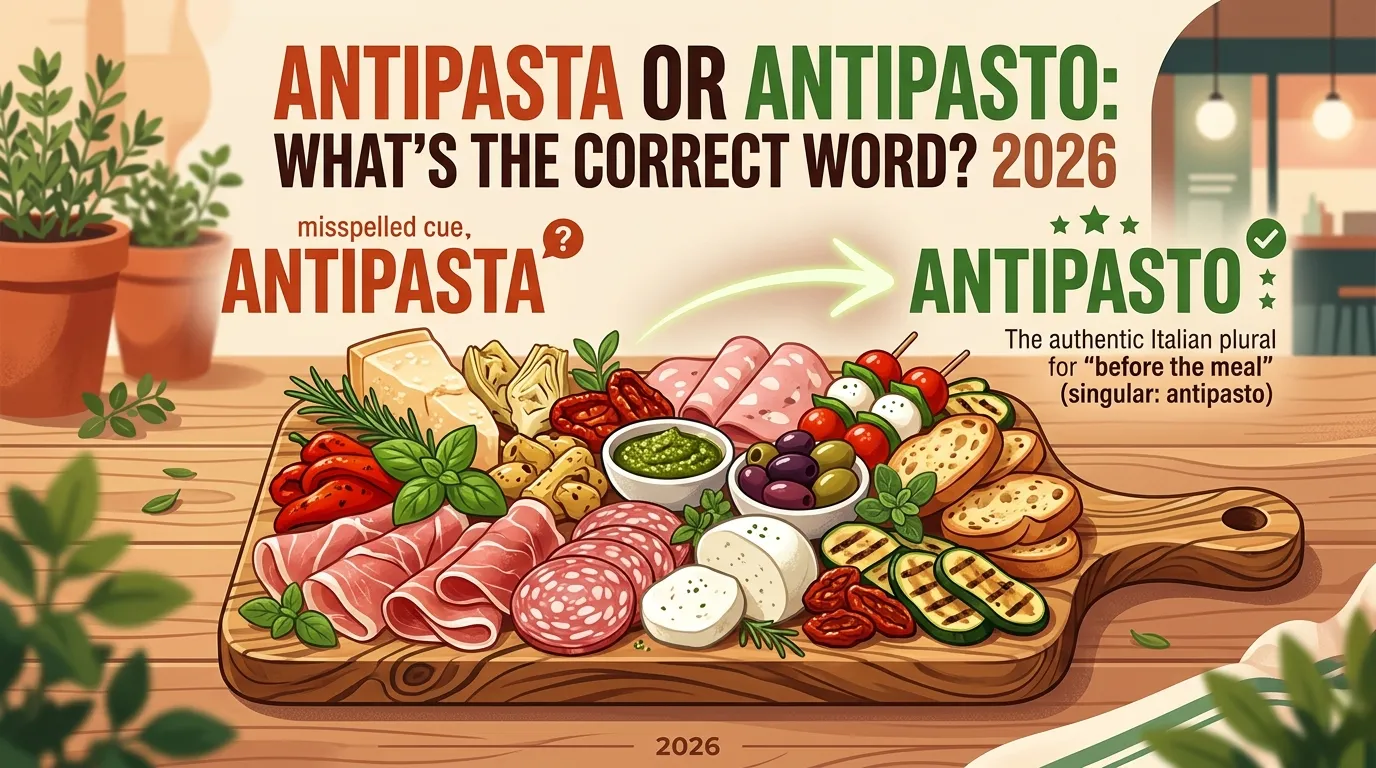
Antipasto is the standard word for an Italian starter. Antipasta is usually a mistaken spelling.
Imagine you are at an Italian restaurant. You look at the menu and see antipasto. You may wonder, “Is it antipasto or antipasta?” The two words look very close, so this is an easy mistake to make.
Antipasto is a food served at the start of an Italian meal. It may include foods such as olives, vegetables, cheese, or sliced meats. Cambridge defines antipasto as a small amount of food eaten at the beginning of an Italian meal. Its plural form is antipasti.
So, why do people write antipasta? The word pasta is very common, and antipasto looks close to it. This can make the spelling easy to mix up.
In this guide, we will explain antipasta or antipasto. Their meanings, spelling, origin, pronunciation, examples, common mistakes, and the correct word to use in everyday writing.
Pronunciation of Antipasto and Antipasta
Antipasto
US: /ˌæn.t̬iˈpɑː.stoʊ/ UK: /ˌæn.tiˈpæs.təʊ/
Antipasta
Antipasta is not the standard Italian food term. It is usually a spelling mistake for antipasto. Because the spelling is different, people may also pronounce the ending differently.
The Main Difference Between Antipasta and Antipasto
Antipasto is the standard word. Antipasta is usually a mistaken spelling.
Here are 10 clear differences.
1. Spelling
Antipasto is the standard spelling.
Example 1: We ordered an antipasto plate.
Example 2: The restaurant serves fresh antipasto.
2. Meaning
Antipasto refers to food served at the beginning of an Italian meal.
Example 1: The meal started with antipasto.
Example 2: We shared an antipasto plate.
3. Part of Speech
Antipasto is a noun.
Example 1: The antipasto was delicious.
Example 2: We ordered some antipasto.
4. Italian Food Meaning
Antipasto is linked to Italian food and meal traditions.
Example 1: The menu had a large antipasto plate.
Example 2: She prepared an antipasto dish for dinner.
5. It Does Not Mean “Before Pasta”
Antipasto does not mean “before pasta.” Its origin is connected to anti-, meaning “before,” and pasto, meaning “food.”
Example 1: Antipasto may come before the main part of a meal.
Example 2: Antipasto is not named because it comes before a pasta dish.
6. Singular Form
Antipasto is the singular form.
Example 1: We ordered one antipasto.
Example 2: This antipasto has olives and cheese.
7. Plural Form
The traditional Italian plural is antipasti.
Example 1: The menu has several antipasti.
Example 2: We shared three antipasti.
8. Restaurant Menus
Antipasto is the spelling you should expect on a standard menu.
Example 1: The menu offers an antipasto plate.
Example 2: Try the vegetable antipasto.
9. Recipes
Recipes also use antipasto.
Example 1: This recipe makes a simple antipasto salad.
Example 2: Prepare the antipasto before dinner.
10. Formal Writing
Use antipasto in careful English writing.
Example 1: The restaurant served an Italian antipasto before the main course.
Example 2: The cookbook includes several antipasto recipes.
Explore related topics https://orchoice.com/here-or-hear/
Nature and Behaviour of Antipasto and Antipasta
Antipasto
Antipasto is a food word. It is a noun.
It usually describes food served at the beginning of an Italian meal. The exact foods can change by region and dish.
It can include foods such as:
- Olives
- Cheese
- Vegetables
- Sliced meats
- Other small foods
Antipasta
Antipasta is normally a mistaken form of antipasto in standard food writing.
Why Do People Get Confused About Antipasta and Antipasto?
The confusion is easy to understand.
First, the two words look almost the same.
Second, pasta is a very common Italian food word.
Third, people may hear antipasto and remember the ending as pasta.
Fourth, antipasto is less common in everyday English than words such as pasta or appetizer.
So, people may change the spelling without knowing it.
A simple memory trick is:
Antipasto = starter food
Antipasta vs Antipasto Comparison Table
| Feature | Antipasto | Antipasta |
|---|---|---|
| Standard spelling | Yes | Usually a mistake |
| Meaning | Italian starter food | Usually no standard food meaning |
| Part of speech | Noun | Usually a mistaken noun |
| Singular | Antipasto | Not standard |
| Traditional plural | Antipasti | Not standard |
| Food type | Starter or early meal food | Usually means antipasto when used |
| Restaurant use | Common | Usually incorrect |
| Recipe use | Correct | Usually incorrect |
| Formal writing | Use it | Avoid it |
| Main idea | Food served at the beginning of a meal | Common spelling mix-up |
The Origin of Antipasto
The word antipasto comes from Italian.
The word is made from anti-, meaning “before,” and pasto, meaning “food.” The deeper history connects pasto with Latin words linked to feeding.
This helps explain why antipasto refers to food served at the beginning of a meal.
An older English form, antepast, was also used in the 1580s for food eaten before a meal.
One important point is that antipasto does not mean “before pasta.” The word is connected to food and a meal, not simply to pasta.
Antipasto in British and American English
The spelling antipasto is used in both British and American English.
The main difference is pronunciation.
EnglishPronunciationBritish English/ˌæn.tiˈpæs.təʊ/American English/ˌæn.t̬iˈpɑː.stoʊ/
Cambridge and Oxford both list antipasti as the plural form.
American English dictionaries may also record antipastos as an English plural.
Which One Should You Use?
| English Type | Which Word to Use | Example |
|---|---|---|
| USA English | Use antipasto. | We ordered an antipasto plate. |
| UK English | Use antipasto. | The restaurant served antipasto before the main meal. |
| Global English | Use antipasto for the Italian starter. | We shared an antipasto before dinner. |
Common Mistakes
Mistake 1
Incorrect: We ordered an antipasta plate.
Correct: We ordered an antipasto plate.
Mistake 2
Incorrect: The restaurant has fresh antipastas on the menu.
Correct: The restaurant has fresh antipasti on the menu.
Mistake 3
Incorrect: Antipasto means food before pasta.
Correct: Antipasto means food served at the beginning of an Italian meal.
Mistake 4
Incorrect: We ate antipasta before dinner.
Correct: We ate antipasto before dinner.
Mistake 5
Incorrect: She made three antipasto.
Correct: She made three antipasti.
Everyday Usage Examples
In an Email
We can order an antipasto plate for the meeting.
In a Social Media Post
Tonight’s dinner started with a fresh antipasto plate.
In a News Article
The restaurant opened with a menu of Italian antipasti.
In Formal Writing
The meal began with a selection of traditional antipasti.
In a Recipe
Place the vegetables on an antipasto plate.
In Daily Conversation
I would like to try the antipasto.
Usage Trends
There is no need to use unsupported search numbers to explain these words.
Major English dictionaries list antipasto as the standard word and antipasti as its plural.
Antipasta is often seen because it looks similar to the familiar word pasta. In careful writing, however, antipasto is the better choice.
Metaphors and Similes
Antipasto can also be used in a figurative way.
For example:
The short preview was an antipasto for the main event.
Here, antipasto is used as a metaphor for a small taste of something that comes before the main part.
Another example:
The first chapter was like an antipasto before the main story.
Connotative Meaning
Positive
Antipasto can suggest:
- Good food
- Italian cooking
- Sharing
- A pleasant meal
- A special dining experience
Example: The antipasto made the dinner feel special.
Negative
The word itself does not have a strong negative meaning.
However, antipasta may look like a spelling mistake in careful writing.
Neutral
In a menu, recipe, or food article, antipasto is usually neutral.
Example: The menu includes antipasto, pasta, and dessert.
Idioms and Proverbs
There is no common English proverb or famous idiom based on antipasto.
However, the word can be used creatively to mean a small beginning before the main event.
For example:
The opening speech was an antipasto for the main discussion.
Antipasto in Literature and Movies
Literature
Essentials of Classic Italian Cooking — Marcella Hazan, 1992
This well-known English-language cookbook focuses on Italian cooking. It is useful background when studying Italian food terms such as antipasto.
Movie
Big Night — 1996, United States
This film follows two brothers who run an Italian restaurant in the United States. Food, cooking, and Italian-American restaurant culture are central to the story.
Why Does the Difference Matter?
If you write antipasta when you mean the Italian starter, some readers may see it as a spelling error.
Using antipasto is especially useful in:
- Restaurant menus
- Recipes
- Food blogs
- School writing
- Articles
- Reviews
- Emails
- Formal writing
Usefulness in Daily Life
You may see antipasto on a restaurant menu, in a cookbook, or in a food article.
Knowing the word can help you order food and understand menus.
For example:
What is the antipasto?
You may then learn that it is a small dish or selection of foods served at the beginning of an Italian meal.
Knowing the plural is also useful:
The restaurant has several antipasti.
Situational Preference
Use antipasto when you mean an Italian starter or food served at the beginning of a meal. This is the standard spelling used by major English dictionaries. Use antipasti when you are talking about more than one. In American English, antipastos is also recorded as a plural form. Avoid antipasta in careful writing unless you are talking about the spelling mistake itself. Remember that antipasto is connected to before + food, not “before pasta.” This simple idea can help you remember the correct word.
Questions About Antipasta or Antipasto
1. Is antipasto or antipasta correct?
Antipasto is the standard word for the Italian starter.
2. Is antipasta a real word?
It can appear as a spelling form, but it is usually a mistaken form of antipasto in standard food writing.
3. What does antipasto mean?
It means a small amount or selection of food served at the beginning of an Italian meal.
4. What is the plural of antipasto?
The traditional Italian plural is antipasti.
5. Does antipasto mean before pasta?
No. The word is connected to before food or food at the start of a meal. It does not mean “before pasta.”
6. Can antipasto include vegetables?
Yes. Antipasto can include different foods, and the exact contents can vary by region and dish.
7. Is antipasto used in American English?
Yes. Antipasto is used in American English, and American dictionaries also record antipastos as a plural form.
Conclusion
Antipasta or antipasto can be confusing because the two words look very similar. Antipasto is the correct word for food served before the main meal, while antipasta is usually a mistaken spelling. Antipasto can include foods such as cured meats, cheese, olives, vegetables, and other small dishes. Remember that antipasto means food served before the main meal, not “before pasta.” Knowing the correct spelling can help you write clearly when talking about Italian food, menus, recipes, or meals.










1 thought on “Antipasta or Antipasto: What’s the Correct Word? 2026”