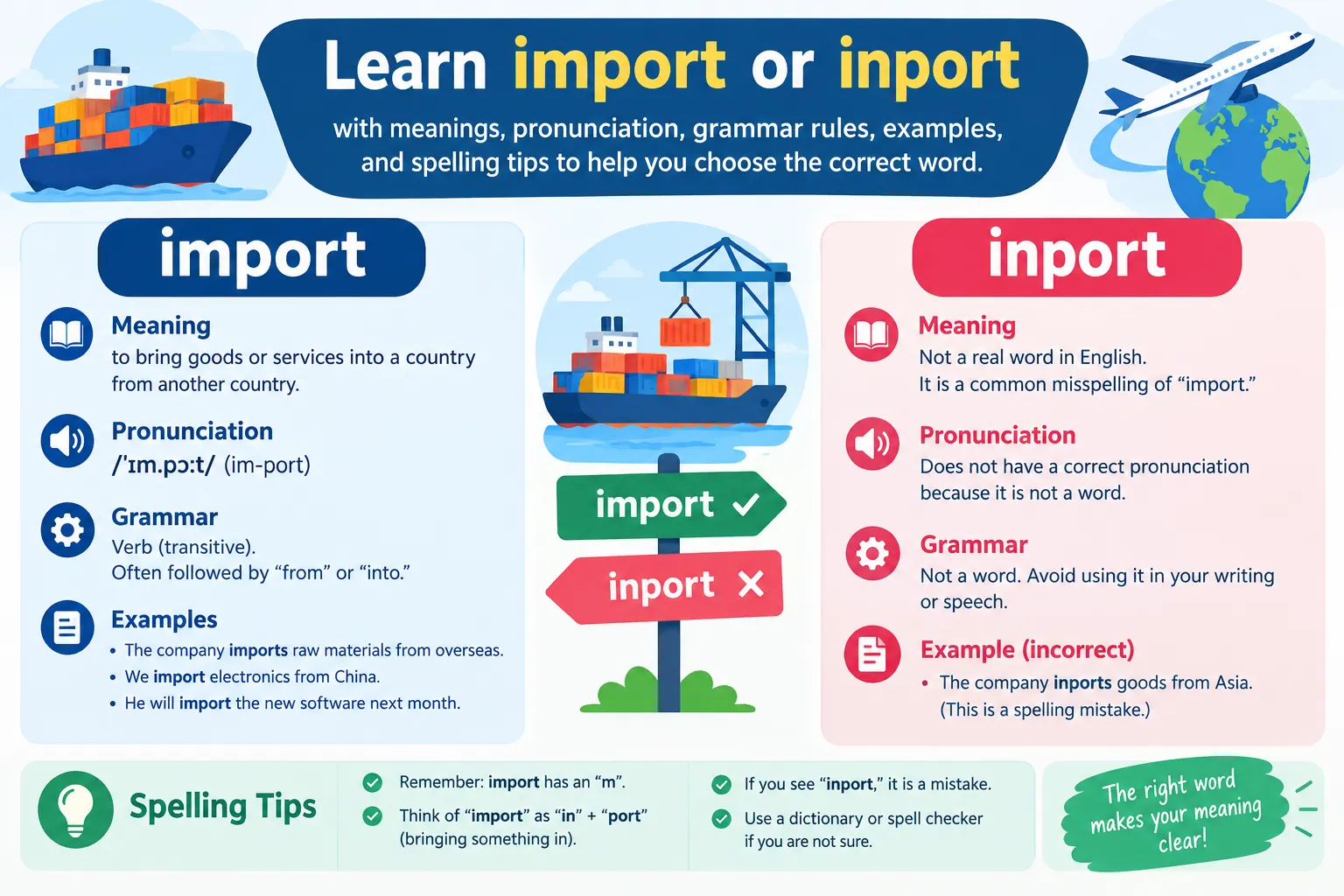
Import is the correct word for bringing goods, files, or information in. Inport is usually a spelling mistake.
Imagine you buy a phone from another country. The phone enters your country through trade. You can say your country will import the phone. You may also use import when you move photos into an app or bring data into a computer program.
Many people search for “import or inport” because these words look and sound similar. They may be unsure which spelling is correct. The answer is simple: import is the standard English word. Inport is not a standard spelling for the usual meanings of import.
The word import can work as a verb or a noun. As a verb, it means to bring something in or to show that something is important. As a noun, it can mean the meaning or importance of something. It is common in business, travel, technology, schoolwork, and daily life.
This guide explains the difference between import and inport. You will learn their pronunciation, meanings, grammar rules, examples, and common mistakes. By the end, you will know which word to use.
Pronunciation
- Import (US): Noun: /ˈɪm.pɔːrt/; verb: /ɪmˈpɔːrt/
- Import (UK): Noun: /ˈɪm.pɔːt/; verb: /ɪmˈpɔːt/
- Inport (US and UK): No standard pronunciation is given because inport is not a standard word in ordinary English.
Difference Between Import and Inport
1. Correct Spelling
Import is the correct spelling for the common English word. Inport is usually a spelling error.
- Correct: We import coffee from Brazil.
- Incorrect: We inport coffee from Brazil.
2. Meaning
Import has several meanings. It can mean bringing something into a place or showing that something matters. Inport has no common, standard meaning in general English.
- Correct: The shop will import new shoes.
- Incorrect: The shop will inport new shoes.
3. Use as a Verb
As a verb, import can mean to bring goods or data into a country, place, or system.
- I will import the photos to my laptop.
- The company imports cars from Japan.
4. Use as a Noun
As a noun, import can mean goods brought into a country. It can also mean the meaning or importance of something.
- Oil is a major import for the country.
- The message was clear in its import.
5. Business and Trade
Businesses use import when they buy goods from another country.
- The store imports tea from India.
- These imports arrive by ship.
6. Computers and Technology
In technology, import means bringing files, data, or settings into a program.
- Import the file into the app.
- I imported my contacts to the new phone.
7. Grammar
Import can be a noun or a verb. Its form depends on how it is used in a sentence.
- Noun: The import arrived today.
- Verb: They import fresh fruit.
8. Pronunciation
The pronunciation of import can change with its role. The noun often has stress at the start, while the verb often has stress later.
- Noun: This import is costly.
- Verb: We import goods each year.
9. Formal Writing
Use import in essays, reports, emails, and business documents. Avoid inport unless it is a specific name or technical label.
- Correct: Please import the data before Friday.
- Incorrect: Please inport the data before Friday.
10. Meaning in a Sentence
The meaning of import depends on the context. It can refer to goods, data, or importance.
- The country limits the import of some goods.
- Her words were of great import.
Nature and Behaviour of Import and Inport
Import
Import is a standard English word. It can be a noun or a verb. As a verb, it often describes bringing something into a country or computer system. As a noun, it can name goods brought in or refer to meaning and importance.
Examples:
- We import fruit from nearby countries.
- Click the button to import your files.
Inport
Inport is not a standard English word for these meanings. It often appears when someone types import incorrectly. However, a business, product, or system could use Inport as a special name. In that case, follow the spelling used by that source.
Examples:
- Use import to bring in the file.
- Check the product name before changing its spelling.
Why People Get Confused About Import and Inport
People may confuse the words because they differ by only one letter. The letters m and n can also be easy to mistype on a keyboard.
Some people may hear the word and guess its spelling. Others may type quickly and miss the correct letter. Search engines may also show both forms when people look for the right spelling.
The simple rule is this: use import for the standard English word. If Inport appears as a brand or special name, check the source before changing it.
Comparison Table
| Feature | Import | Inport |
| Standard English word | Yes | No, not for the usual meaning |
| Correct spelling for bringing goods in | Yes | No |
| Used as a verb | Yes | No, not in standard English |
| Used as a noun | Yes | No, not in standard English |
| Used in business | Yes | Usually a mistake |
| Used in computer programs | Yes | Usually a mistake |
| Can mean importance | Yes | No |
| Suitable for formal writing | Yes | No, unless it is a proper name |
| Standard pronunciation | Yes | No standard pronunciation |
| Best choice in ordinary writing | Yes | No |
The Origin of Import
The word import comes from Latin roots. It is linked to the Latin verb importare, which means “to bring in” or “to carry in.” The word entered English through French and Latin-based forms.
Over time, import became common in trade. It described goods brought into one country from another. Later, it also became useful in computing. Today, people can import goods, files, contacts, photos, and data.
The noun import also developed a meaning linked to importance or meaning. For example, a writer may say that a message is “of great import.” This means the message is important.
Inport does not have the same standard word history for these uses. In most cases, it is simply a misspelling of import.
British vs American English
British and American English both use import. There is no spelling difference between these varieties for this word.
| Use | British English | American English |
| Correct spelling | Import | Import |
| Verb example | We import tea. | We import tea. |
| Noun example | The import arrived. | The import arrived. |
| Computer example | Import the file. | Import the file. |
| Common mistake | Inport | Inport |
Which One Should You Use?
Use import in ordinary English writing, whether you are writing for readers in the United States, the United Kingdom, or another country.
- For US readers: Write import.
- For UK readers: Write import.
- For global readers: Write import.
- For business writing: Use import for goods brought in from another country.
- For technology: Use import when bringing data or files into a program.
Common Mistakes
Here are common errors and their corrections.
- Incorrect: We inport fresh fruit.
Correct: We import fresh fruit. - Incorrect: Please inport the file.
Correct: Please import the file. - Incorrect: The country buys many inports.
Correct: The country buys many imports. - Incorrect: I will inport my contacts.
Correct: I will import my contacts. - Incorrect: This report is of great inport.
Correct: This report is of great import.
Everyday Usage Examples
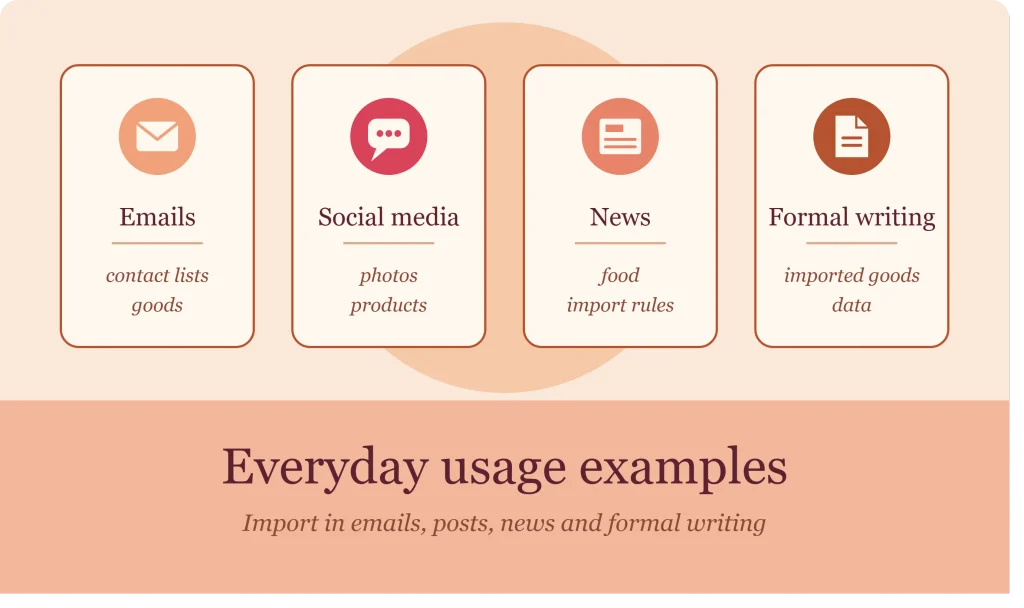
In Emails
- Please import the new contact list.
- The company will import the goods next month.
On Social Media
- I just imported my photos to my new phone.
- This product is imported from Italy.
In News
- The country plans to import more food.
- New import rules may affect prices.
In Formal Writing
- The report explains the value of imported goods.
- The team will import the data before the study begins.
Usage Trends
Import is widely used around the world. It is common in trade, finance, technology, travel, and everyday writing. People use it when talking about goods from other countries and when moving information between computer programs.
The word inport may appear in search queries, typos, or special names. It is not a standard replacement for import. When readers search for “import or inport,” they are often trying to confirm the correct spelling.
You May Also Like https://orchoice.com/mama-or-mamma/
Metaphors and Similes
The word import can be used in a figurative way when it means importance or meaning. It is less common in everyday speech in this sense.
Examples
- “Her words were of great import.” This means her words were very important.
- “The choice was of little import.” This means the choice did not matter much.
- “The news carried great import.” This means the news had a strong meaning or effect.
Connotative Meaning
The word import can have different feelings depending on the sentence.
Positive Meaning
It can suggest value, progress, or importance.
- The import of clean energy is growing.
- Her advice was of great import.
Negative Meaning
It can appear in sentences about costs, risks, or harmful goods.
- The import of unsafe products can put people at risk.
- High import costs raised the price.
Neutral Meaning
It can simply describe goods or data brought in.
- The country imports rice.
- I imported the file into the program.
Inport has no usual positive, negative, or neutral meaning because it is not a standard word for these uses.
Idioms and Proverbs
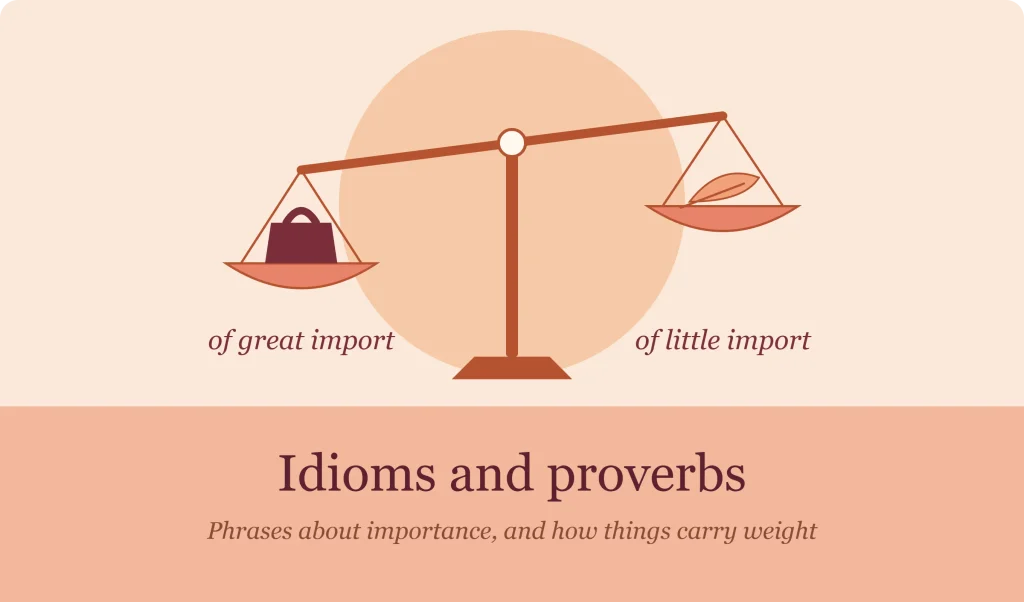
There are no common English idioms built around inport. The word import appears in some formal phrases about meaning or importance.
Of Great Import
This means very important.
- The new law is of great import to the town.
Of Little Import
This means not very important.
- The small delay was of little import.
Carry Weight
This phrase means to have influence or importance. It does not use import, but it can help explain the idea of importance.
- Her opinion carries weight with the team.
Literature and Movies
The noun import can appear in formal writing, history, and literature when a writer wants to show that something has meaning or importance. The word is also common in books and films about trade, travel, and business.
Literature
- Dictionaries and grammar books: These explain import as a word for bringing goods in or for meaning and importance.
- Business and history books: These often use import when discussing trade between countries.
- Formal essays: Writers may use the phrase “of great import” to show that an event matters.
Movies
Films about trade, travel, and technology may use the word import in dialogue or on screen. For example, a story about a company may discuss imported goods. A story about computers may show a character importing data.
There is no well-known movie or literary work that is mainly about the spelling difference between import and inport. The key point is that import is the standard word.
Why This Difference Matters
Using the correct spelling helps readers understand your message. If you write inport by mistake, readers may think it is a typo or wonder whether it is a special name. This can make an email, report, or school assignment look less clear.
The word import is used in many fields. A student may import data into a project. A shop may import goods. A news report may discuss a country’s imports. Knowing the correct spelling helps you write about all these topics.
For English learners, this is a useful word to remember because it appears in daily life and work. The rule is simple: write import for the standard word.
Usefulness in Daily Life
You may use import more often than you think. On a phone, you might import contacts or photos. At school, you might import data into a chart. At work, you might import a list into a computer program.
You may also see the word when shopping online or reading news about goods from other countries. For example, a store may import shoes, tea, or tools.
Remembering the correct spelling helps you follow instructions and write clear messages. If you see inport, check whether it is a special name. Otherwise, import is almost always the word you need.
Situational Preference
Use import in schoolwork, emails, business reports, news writing, and computer instructions. It is the standard spelling in both British and American English. When discussing trade, use it for goods brought into a country. When using software, use it for files or data brought into a program. If you mean that something matters, import can also mean importance in formal writing. Avoid inport unless you are copying a confirmed name or label. This rule works for most daily situations and helps keep your writing clear and correct.
Top Queries
1. Is import or inport correct?
Import is correct for the usual English word. Inport is generally a spelling mistake.
2. What does import mean?
As a verb, import means to bring goods or data in. As a noun, it can mean goods brought in or the meaning of something.
3. Is inport a real word?
It is not a standard English word for the usual meanings of import. It may appear as a special name or label.
4. How do you use import in a sentence?
You can say, “We import coffee from Brazil.” You can also say, “Please import the file into the app.”
5. Is import spelled differently in British and American English?
No. Both British and American English use import.
6. What is the noun form of import?
Import can already be a noun. For example, “The country’s main import is oil.” The plural form is imports.
7. What does “of great import” mean?
It means “very important.” It is a formal phrase, and of great importance is more common in daily English.
Conclusion
The difference between import and inport is simple. Import is the standard English word, while inport is usually a spelling mistake. The word import can be a noun or a verb. It can describe goods brought into a country, files moved into a program, or the meaning and importance of something. Both British and American English use the same spelling. You may see import in business, schoolwork, news, emails, and technology. For example, a shop can import shoes, and a student can import data into a chart. You may also read the phrase “of great import,” which means very important. If you see inport, check whether it is a special name. If it is not, use import. This easy rule will help you avoid a common spelling error and make your writing clearer. Remember: when you mean bringing something in or showing importance, import is the word to choose.

I’m Samia Jamshaid, an English language specialist, SEO specialist, digital publisher, and researcher. I create clear, accurate, and well-researched content on English grammar, vocabulary, word meanings, and language comparisons, helping readers understand and use English with confidence.










1 thought on “Import or Inport: Spelling Guide for English Learners 2026”