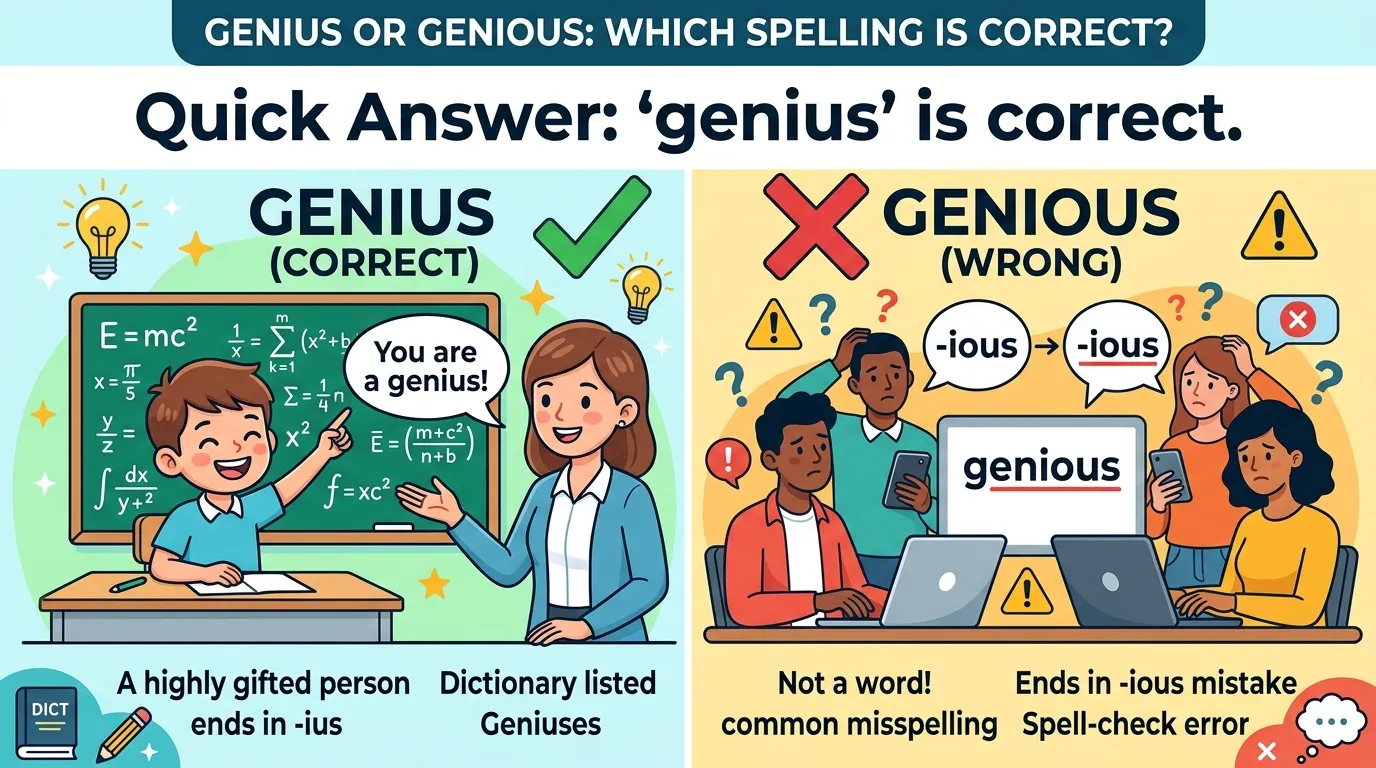
Quick answer: “genius” is correct. “Genious” is a common misspelling.
Think about a boy in school who solves a hard math problem in seconds. His teacher looks at him and says, “You are a genius!” He smiles big. That word makes him feel proud and smart. Many people try to write this word later and type “genious” by mistake. It looks close, but it is wrong.
Genius means a person with very high skill or smarts, often in a special area like math, art, or music. It can also mean a natural gift or talent. People search for “genius or genious” because the spelling feels tricky. The word has an unusual letter order, and many similar words end in “-ious,” like “curious” or “serious.” This makes people guess wrong. This article clears up the confusion. You will learn the true spelling of genius, its history, pronunciation, and how to use it the right way every time.
Pronunciation
| Word | US Pronunciation | UK Pronunciation |
|---|---|---|
| Genius | /ˈdʒiːn.jəs/ | /ˈdʒiː.ni.əs/ |
Genious is not a real word, so it has no standard pronunciation. People say it the same way as “genius” by mistake.
Transition
Now let’s look closely at why “genius” is correct and why “genious” trips up so many writers.
Difference Between Genius and Genious
1. Correct Spelling
“Genius” is the correct spelling. “Genious” is not a word.
- Example: “She is a true genius.” (correct)
- Example: “She is a true genious.” (wrong)
2. Word Ending
“Genius” ends in “-ius.” Many similar words end in “-ious,” which causes mix-ups.
- Example: “curious” ends in “-ious.”
- Example: “genius” ends in “-ius,” not “-ious.”
3. Dictionary Status
“Genius” appears in every English dictionary. “Genious” does not appear in any of them.
- Example: Merriam-Webster lists “genius.”
- Example: No major dictionary lists “genious.”
4. Spelling Pattern
“Genius” comes from Latin and kept its short form. “Genious” adds an extra letter that does not belong.
- Example: “Genius” has one “i” before “us.”
- Example: “Genious” wrongly adds an extra “o.”
5. Common Cause of Error
People often confuse “genius” with words like “gracious” or “delicious.”
- Example: “Gracious” has the “-ious” pattern.
- Example: Writers copy that pattern into “genius” by mistake.
6. Formal Writing
Only “genius” is accepted in books, essays, and news articles.
- Example: “The scientist was called a genius.”
- Example: A newspaper would never print “genious.”
7. Spell-Check Tools
Spell-check always marks “genious” as wrong and suggests “genius.”
- Example: Typing “genious” in Word shows a red underline.
- Example: Typing “genius” shows no error.
8. Use in Plural Form
The plural of “genius” is “geniuses.” There is no plural for “genious” since it does not exist.
- Example: “Two geniuses worked on the project.”
- Example: “Two geniouses” is never correct.
9. Search Engine Results
People often type “genious” into search engines by accident, hoping for the right spelling.
- Example: A search for “genious meaning” shows results for “genius.”
- Example: Google auto-corrects “genious” to “genius.”
10. Learning Impact
New English learners often learn the wrong spelling first because it sounds correct.
- Example: A student writes “genious” in an essay by mistake.
- Example: A teacher corrects it to “genius.”
Nature and Behaviour of Genius and Genious
Genius is a real English word. Genius behaves as a noun, meaning a highly skilled or gifted person. It can also act as an adjective in phrases like “a genius idea.” It is used often in school, work, and daily talk to praise smart thinking.
Genious has no real behavior in English. It is simply a spelling mistake. It carries no separate meaning of its own. Whenever someone writes it, they mean the same thing as “genius,” but the spelling is wrong.
You may also like about https://orchoice.com/caretaker-or-caregiver/
Why People Get Confused About Genius and Genious
People get confused because many English words end in “-ious,” like “curious,” “serious,” and “delicious.” The brain expects “genius” to follow the same pattern. But “genius” comes from a different root and keeps a shorter, simpler ending. This small twist causes many spelling mistakes, even among strong writers.
Comparison Table
| Feature | Genius | Genious |
| Correct word | Yes | No |
| Dictionary listed | Yes | No |
| Meaning | A highly gifted person | Same meaning, wrong spelling |
| Pronunciation | /ˈdʒiːn.jəs/ | Same sound, wrong spelling |
| Common use | Books, news, daily speech | Typing mistake only |
| Plural form | Geniuses | Not applicable |
The Origin of Genius
The word “genius” comes from Latin. In ancient Rome, a “genius” was a guardian spirit believed to watch over a person from birth. Over time, the word changed meaning. By the 1600s, it started to mean a person’s natural talent or spirit. Later, it grew to mean a person with extraordinary intelligence or skill. The spelling stayed close to its Latin root, which is why it never changed to “genious.”
British vs American English
Both British and American English spell this word the same way: “genius.” There is no regional difference here. Both forms use “genius” in books, news, and daily writing. The word “genious” is wrong in both British and American English. No English-speaking country accepts it as correct.
- US example: “He is a genius at solving puzzles.”
- UK example: “She is a genius with numbers.”
Which One Should You Use?
- In the US: Always use “genius.” It is the only correct form.
- In the UK: Always use “genius.” The spelling never changes.
- Globally: “Genius” is the universal correct spelling. Never use “genious” in any type of writing, formal or casual.
Common Mistakes
- ❌ “Genious” → ✅ “Genius”
- ❌ “He is a real genious.” → ✅ “He is a real genius.”
- ❌ “Geniouses” → ✅ “Geniuses”
- ❌ Trusting the “-ious” pattern → ✅ Remember “genius” ends in “-ius”
Everyday Usage Examples
Email: “Your idea for the project was pure genius.”
Social Media: “This life hack is genius! 🙌”
News: “Scientists call the new discovery a work of genius.”
Formal Writing: “The professor is widely regarded as a genius in his field.”
Usage Trends
Online, “genius” is used often to praise smart ideas, clever people, and creative work. It appears in headlines, ads, and social media posts. Because “genious” is not a real word, its use is dropping as spell-check tools get better and more people learn the correct spelling.
Metaphors and Similes
- “She has a genius for calming people down” means she is naturally very good at it.
- “His plan worked like the mind of a genius” means it was very smart and well thought out.
Connotative Meaning
- Positive tone: brilliant, gifted, amazing — “What a genius idea!”
- Negative tone: can sound sarcastic — “Oh, genius move, dropping your phone in the pool.”
- Neutral tone: simply describing high intelligence — “He tested as a genius in school.”
Idioms and Proverbs
- “A stroke of genius” — a sudden, brilliant idea.
Example: “Hiring her was a stroke of genius.” - “Evil genius” — someone very smart who uses their skill for bad plans.
Example: “The movie villain was an evil genius.”
Literature and Movies
The word “genius” appears often in books and film titles about brilliant minds. Frankenstein, a gothic novel by Mary Shelley from 1818, tells the story of a genius scientist who creates life. In movies, Good Will Hunting (1997, USA) shows a young genius who struggles with his gift. A Beautiful Mind (2001, USA) tells the true story of a genius mathematician facing mental illness.
Why This Difference Matters
Knowing the correct spelling matters for clear writing. Using “genious” in a resume, essay, or email can make a writer look careless. For English learners, learning the right spelling builds confidence and helps avoid embarrassing mistakes in school or work.
Usefulness in Daily Life
The word “genius” shows up in daily praise, jokes, ads, and conversations about smart people or clever ideas. Knowing how to spell it correctly helps in emails, school papers, and social media posts.
Situational Preference
Always use “genius,” no matter the situation. Whether you write a text message, a school essay, or a business email, “genius” is the only correct choice. There is no situation where “genious” becomes acceptable. If you are ever unsure, remember the short and simple rule: “genius” ends in “-ius,” not “-ious.” This small memory trick can help you avoid the mistake for good.
Common Questions and Answers
Is “genious” a real word?
No. “Genious” is a common misspelling of “genius.”
What does “genius” mean?
It means a person with very high intelligence or a special natural talent.
Why do people spell it “genious”?
Many English words end in “-ious,” so people copy that pattern by mistake.
What is the plural of “genius”?
The plural is “geniuses.”
Is “genius” used in both US and UK English?
Yes. Both use the same spelling: “genius.”
Can “genius” be used as an adjective?
Yes, in phrases like “a genius idea” or “a genius plan.”
How can I remember the correct spelling?
Just remember: “genius” ends in “-ius,” not “-ious,” unlike words like “curious” or “serious.”
Conclusion
Genius or genious which spelling should you use? Only “genius” is correct. “Genious” is simply a common mistake that many people make because of similar-sounding words. The word “genius” comes from old Latin and has kept its short, simple ending for centuries. It means a person with amazing intelligence or a special gift, and it shows up in books, movies, ads, and daily talk. English learners and writers should remember the short rule: “genius” ends in “-ius,” not “-ious.” Spell-check tools, dictionaries, and news writers only accept “genius” as correct. Learning this small but important detail helps you write with more confidence. Next time you want to praise someone’s smart idea, you will know exactly how to spell it right, and your writing will look polished and clear.

I’m Samia Jamshaid, an English language specialist, SEO specialist, digital publisher, and researcher. I create clear, accurate, and well-researched content on English grammar, vocabulary, word meanings, and language comparisons, helping readers understand and use English with confidence.


1 thought on “Genius or Genious: Which Spelling Is Correct? 2026”