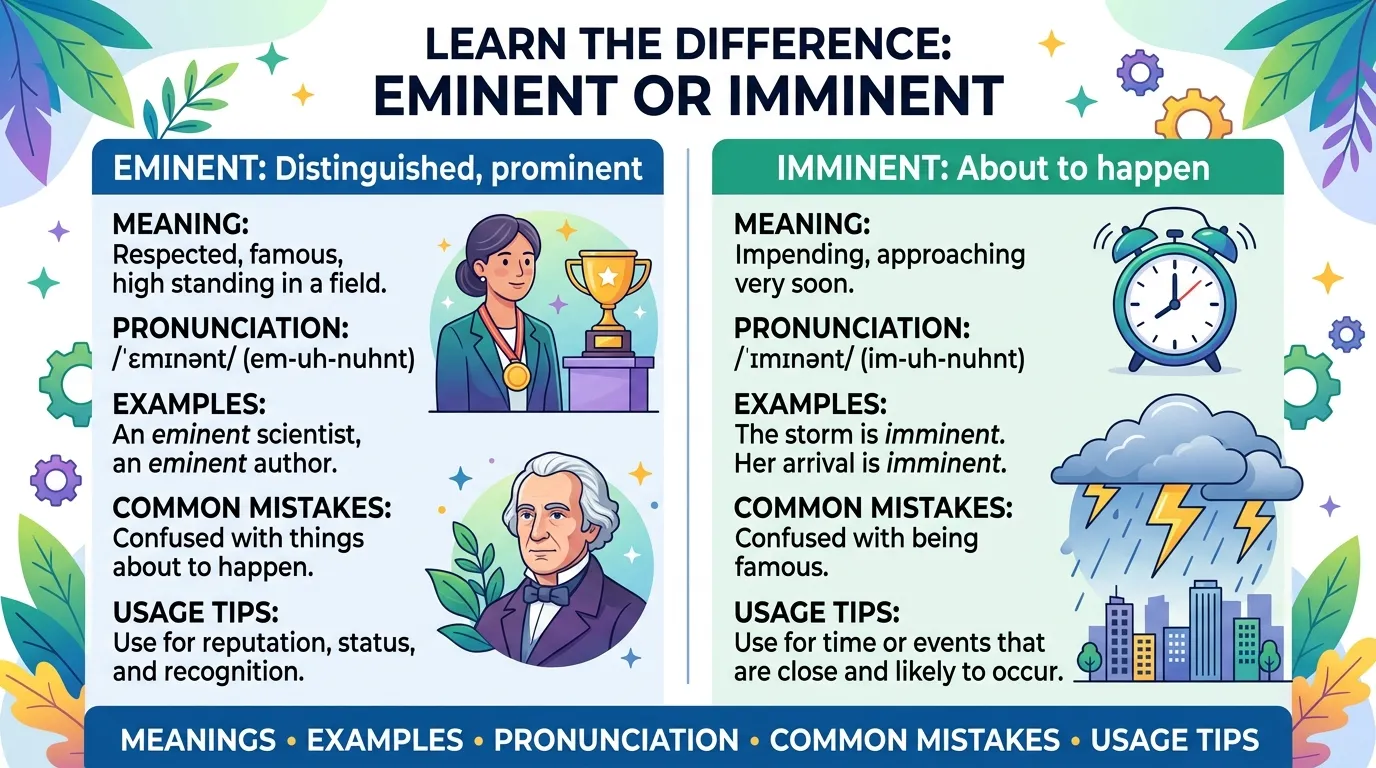
Eminent means famous or respected, while imminent means something is about to happen soon.
Imagine you read a news story about a famous scientist. The story calls her an eminent scientist because many people respect her work. Later in the same article, you read that a storm is imminent. This means the storm is expected very soon. The two words look and sound much alike, so it is easy to mix them up.
Eminent and imminent have very different meanings. Eminent describes a person who is well-known, respected, or important. Imminent describes an event that is about to happen. This is why people often search for eminent or imminent when they are unsure which word to use.
Knowing the difference between eminent or imminent can help you avoid spelling and word-choice mistakes. You may see these words in news reports, school work, emails, books, and formal writing. In this guide, we will explain eminent or imminent in simple words and show how to use each one correctly.
Pronunciation
| Word | US Pronunciation | UK Pronunciation | Syllables |
| Eminent | /ˈemɪnənt/ | /ˈemɪnənt/ | 3 |
| Imminent | /ˈɪmɪnənt/ | /ˈɪmɪnənt/ | 3 |
The words sound very similar, but the first vowel is different. Eminent starts with an e sound. Imminent starts with an i sound.
Difference Between Eminent or Imminent
1. Basic Meaning
Eminent means famous, respected, or important.
Imminent means about to happen very soon.
Examples:
- She is an eminent doctor.
- Heavy rain is imminent.
2. Part of Speech
Both eminent and imminent are adjectives. They describe nouns.
Examples:
- An eminent writer spoke at the event.
- An imminent storm forced people to leave.
3. What Eminent Describes
Eminent usually describes a person. It can also describe a person’s position, work, or reputation.
Examples:
- He is an eminent professor.
- She became an eminent leader in her field.
4. What Imminent Describes
Imminent usually describes an event, danger, change, or action that is about to happen.
Examples:
- The arrival of winter is imminent.
- The police warned of an imminent threat.
5. Time vs. Status
Eminent is about status or respect.
Imminent is about time.
Examples:
- The eminent artist received an award.
- The artist’s retirement is imminent.
6. Use With People
Eminent can describe a person who is highly respected.
Imminent normally does not describe a person.
Examples:
- An eminent scientist joined the team.
- The scientist’s visit is imminent.
7. Use in News
News writers often use imminent when an event may happen soon.
They may use eminent when talking about a respected person.
Examples:
- Officials warned that a storm was imminent.
- An eminent expert gave his opinion.
8. Tone
Eminent often has a positive meaning because it shows respect.
Imminent is often neutral or negative. It depends on what is coming.
Examples:
- The eminent author gave a speech.
- The imminent storm caused concern.
9. Common Synonyms
Synonyms can help you remember the difference.
Eminent means:
- famous
- respected
- distinguished
- notable
Imminent means:
- near
- coming
- approaching
- about to happen
Examples:
- She is a notable scientist. → She is an eminent scientist.
- A storm is approaching. → A storm is imminent.
10. Easy Memory Trick
Think of Eminent = Expert. Both start with E.
Think of Imminent = Immediate. Both begin with I.
Examples:
- An eminent expert spoke at the event.
- An imminent storm is moving toward the city.
You may also like https://orchoice.com/balanced-or-unbalanced/
Nature and Behaviour of Eminent or Imminent
Eminent
Eminent describes someone or something that stands out because of importance, skill, or respect. It is often used in formal writing.
For example, an eminent scientist may have done important research. An eminent writer may have many respected books.
Imminent
Imminent tells us that something is very close to happening. It often describes events that need attention.
For example, an imminent storm may require people to prepare. An imminent deadline means the deadline is very close.
Why People Get Confused About Eminent or Imminent
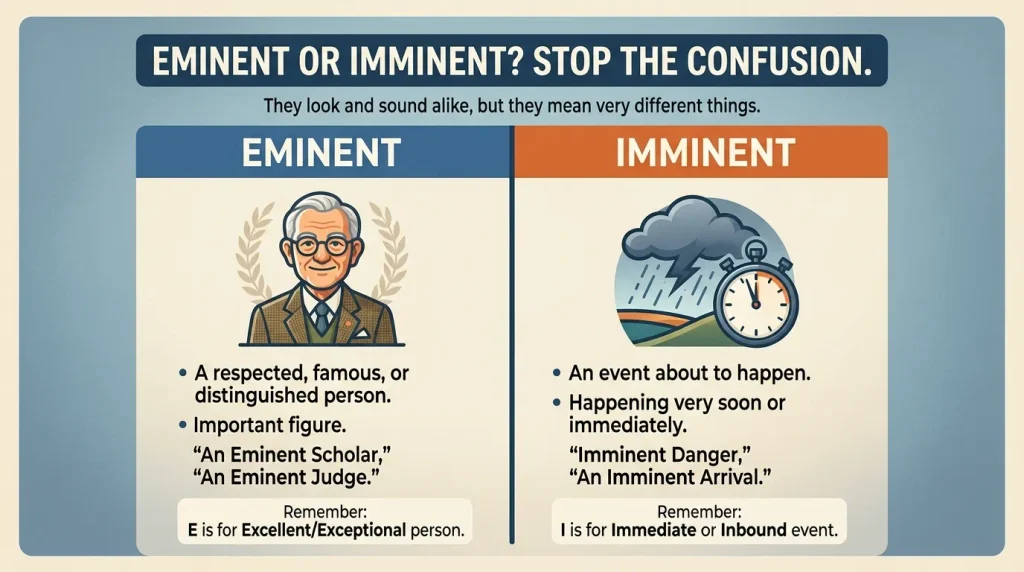
The main reason is that the words look and sound almost the same. Eminent or imminent have three syllables. Both are adjectives. Both are also common in formal writing.
The first letters give a useful clue:
- Eminent → a respected or famous person
- Imminent → an event that is about to happen
A simple way to remember them is:
Eminent = important person.
Imminent = important event coming soon.
Comparison Table
| Feature | Eminent | Imminent |
| Meaning | Famous or respected | About to happen |
| Main idea | Status | Time |
| Usually describes | People | Events or situations |
| Part of speech | Adjective | Adjective |
| Common use | Eminent scientist | Imminent danger |
| Tone | Often positive | Neutral or sometimes negative |
| Synonym | Famous | Approaching |
| Example | An eminent writer | An imminent storm |
| First vowel | E | I |
| Memory clue | Expert | Immediate |
The Origin of Eminent or Imminent
Origin of Eminent
Eminent comes from Latin eminere, which means “to stand out” or “to project.” It later entered English through French. Over time, it came to describe people who stand out because of their skill, position, or reputation.
Today, an eminent person is someone who is highly respected or well known.
Origin of Imminent
Imminent also comes from Latin. It comes from imminere, which means “to overhang” or “to be near.” The idea later became linked with something that is close to happening.
Today, imminent means that an event is about to happen.
The two words have different histories and meanings, even though their forms are very close.
British vs American English
There is no spelling difference between eminent and imminent in British and American English.
| Word | American English | British English |
| Eminent | eminent | eminent |
| Imminent | imminent | imminent |
The meaning is also the same in both forms of English.
Examples:
- US: She is an eminent scientist.
- UK: She is an eminent scientist.
- US: An imminent storm is coming.
- UK: An imminent storm is coming.
Which One Should You Use?
Choose eminent when you mean famous, respected, or important.
Choose imminent when you mean something is about to happen.
For US English
Use eminent for respected people.
Use imminent for events that are very close.
For UK English
The same rule applies. There is no spelling change.
For Global English
Use the same meanings and spellings. These words are widely understood in formal English.
Quick test:
If you can replace the word with famous, use eminent.
If you can replace it with about to happen, use imminent.
Common Mistakes
Mistake 1: Using Imminent for a Famous Person
Incorrect: He is an imminent scientist.
Correct: He is an eminent scientist.
Mistake 2: Using Eminent for Something Coming Soon
Incorrect: A storm is eminent.
Correct: A storm is imminent.
Mistake 3: Thinking They Have the Same Meaning
They do not mean the same thing.
Incorrect: The words are interchangeable.
Correct: Eminent means respected or famous. Imminent means about to happen.
Mistake 4: Using Imminent When You Mean Important
Incorrect: She is an imminent writer.
Correct: She is an eminent writer.
Mistake 5: Using Eminent When You Mean Soon
Incorrect: The deadline is eminent.
Correct: The deadline is imminent.
Mistake 4: Confusing Imminent With Immediate
Imminent means something is very close to happening.
Immediate can mean happening at once or needing quick action.
Mistake 5: Using the Wrong First Vowel
Remember:
- Eminent → famous or respected
- Imminent → coming soon
Everyday Usage Examples
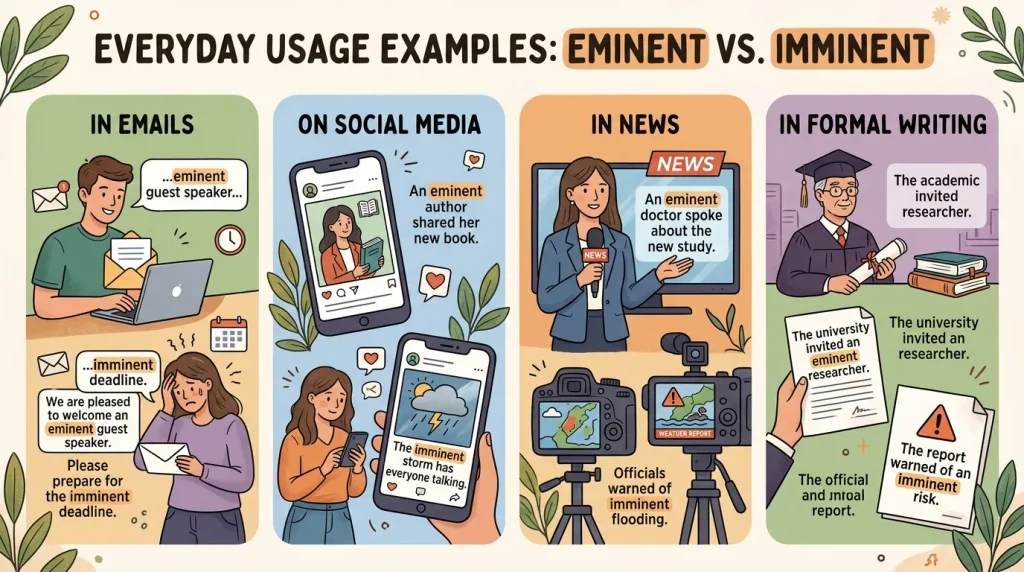
In Emails
- We are pleased to welcome an eminent guest speaker.
- Please prepare for the imminent deadline.
On Social Media
- An eminent author shared her new book.
- The imminent storm has everyone talking.
In News
- An eminent doctor spoke about the new study.
- Officials warned of imminent flooding.
In Formal Writing
- The university invited an eminent researcher.
- The report warned of an imminent risk.
Usage Trends
Both words are still used in modern English. Eminent is common in formal writing about experts, leaders, writers, scientists, and other respected people.
Imminent is common in news reports, safety messages, weather reports, and formal writing about events that may happen soon.
In everyday speech, people may use simpler words such as famous, respected, coming, or soon. Still, eminent and imminent remain useful in formal English.
Metaphors and Similes
These words can also appear in figurative writing.
Eminent
Eminent can show that someone stands above others because of skill or respect.
- She is an eminent voice in modern science.
- He stands like a leading light in his field.
Imminent
Imminent can create a feeling that something is very close.
- The deadline hung over us like a dark cloud.
- The storm felt imminent, like a wave ready to break.
Connotative Meaning
Eminent
Eminent usually has a positive meaning. It suggests respect, skill, success, or importance.
Example:
The eminent professor was respected by students around the world.
Imminent
Imminent is usually neutral, but it can have a negative feeling when the coming event is dangerous or unwanted.
Example:
The warning made people fear imminent danger.
It can also be positive:
Example:
The team’s imminent victory excited the fans.
Idioms and Proverbs
There are no major common idioms that use eminent or imminent directly. However, related words are common in English.
A person of note
This means an important or respected person.
Example:
She is a person of note in the medical field.
Around the corner
This means something is coming soon.
Example:
The holiday season is just around the corner.
This idea can help you remember imminent because something imminent is very close.
Literature and Movies
The idea behind eminent appears often in literature. Writers use words such as famous, great, respected, and distinguished to describe major characters or public figures.
For example, classic English literature often presents respected scholars, leaders, and artists as important figures in society.
The idea behind imminent is also common in fiction. Writers use it when danger, change, or a major event is about to happen.
In movies, imminent is often linked with action, danger, storms, war, or a major event. For example, disaster and action films often build tension around an imminent threat.
Why This Difference Matters
Knowing the difference between eminent and imminent helps you choose the right word. A small spelling change can create a very different meaning.
If you call a person imminent, your sentence is wrong. If you say a storm is eminent, the reader may not understand what you mean.
This difference matters in school work, emails, reports, news writing, and professional communication. It also helps English learners build a stronger vocabulary.
A simple memory rule makes the choice easy:
Eminent = respected or famous.
Imminent = coming very soon.
Usefulness in Daily Life
You may see eminent in:
- news articles
- school essays
- academic writing
- biographies
- professional reports
- speeches
You may see imminent in:
- weather reports
- safety warnings
- news reports
- work emails
- legal writing
- formal notices
For daily speech, simpler words are often better. You can say famous instead of eminent and coming soon instead of imminent when the situation is casual.
Situational Preference
Use eminent when you are talking about a person who is famous, respected, or important in a field. It works well in formal writing, news, school work, and professional settings. Use imminent when an event is about to happen. It is useful in news, weather reports, safety notices, and formal writing. For casual speech, simpler words may sound more natural. You can say famous instead of eminent or coming soon instead of imminent. If you are unsure, ask yourself what the sentence means. When eminent or imminent it describes a respected person, choose eminent. If it describes something close to happening, choose imminent.
What People Ask About Eminent or Imminent
1. What is the difference between eminent and imminent?
Eminent means famous or respected. Imminent means about to happen soon.
2. Is an eminent person famous?
Yes. Eminent usually describes someone who is famous, respected, or important in a field.
3. Does imminent mean immediate?
They are close in meaning, but they are not exactly the same. Imminent means something is about to happen. Immediate can mean happening at once or needing quick action.
4. Can eminent describe an event?
It usually describes a person or their position, work, or reputation. It is not normally used to mean that an event is coming soon.
5. Can imminent describe a person?
Usually no. Imminent normally describes an event, danger, change, or situation that is about to happen.
6. Are eminent and imminent pronounced the same?
No. They sound very similar, but eminent begins with an “e” sound, while imminent begins with an “i” sound.
7. Which spelling is correct in American and British English?
Both eminent and imminent have the same spelling in American and British English. Their meanings are also the same.
Conclusion
Eminent or imminent look and sound similar, but they have different meanings. Eminent means famous, respected, or important. It is often used for people such as scientists, writers, doctors, leaders, and experts. Imminent means something is about to happen very soon. It is often used for storms, danger, deadlines, changes, and other events. A simple way to remember the difference is Eminent = respected and Imminent = coming soon. Both words are used in American and British English with the same spelling and meaning. They are common in news, formal writing, school work, and professional communication. When choosing between them, look at what your sentence describes. If it describes a respected person, use eminent. If it describes something that is close to happening, use imminent. This small memory trick can help you avoid a common English mistake.

I’m Samia Jamshaid, an English language specialist, SEO specialist, digital publisher, and researcher. I create clear, accurate, and well-researched content on English grammar, vocabulary, word meanings, and language comparisons, helping readers understand and use English with confidence.






1 thought on “Eminent or Imminent: How Are They Different? 2026”