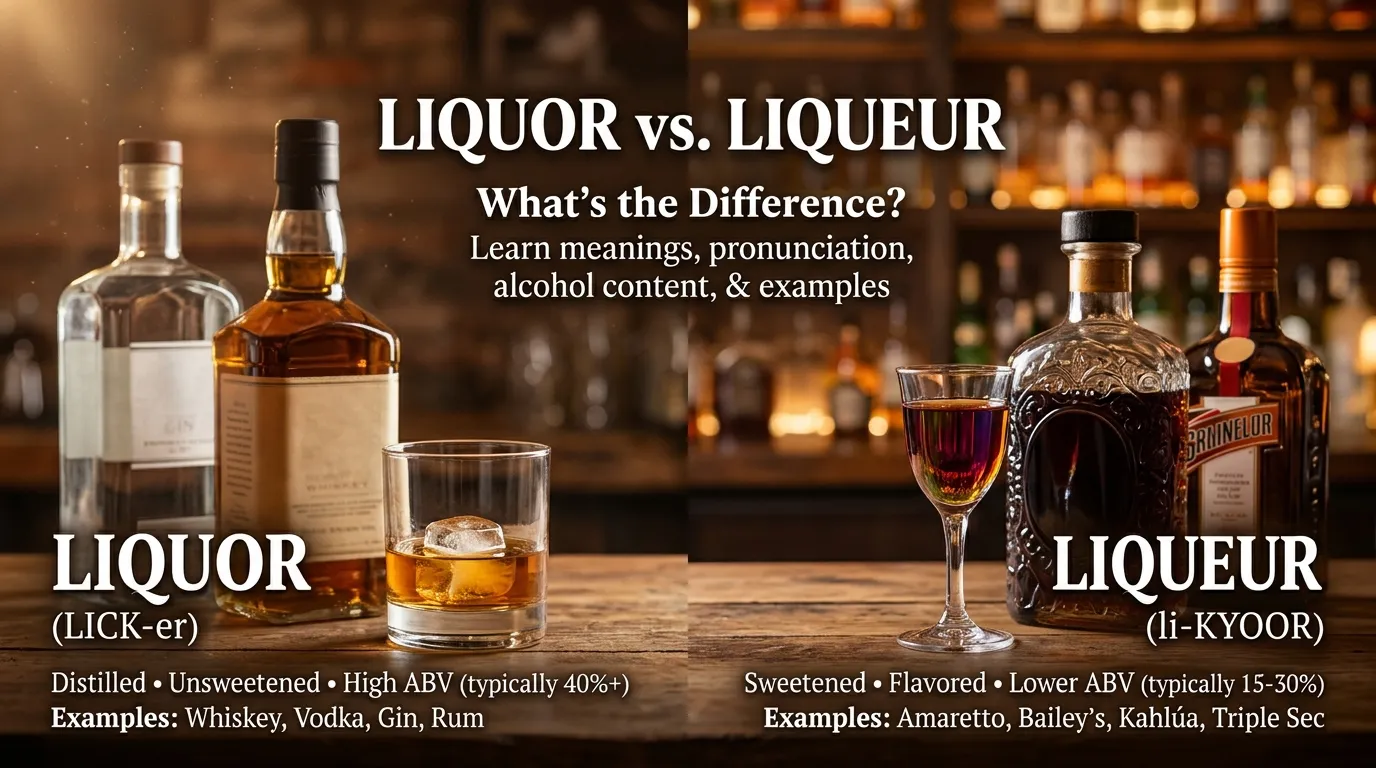
Have you ever wondered whether liqueur and liquor mean the same thing? These words look and sound alike, so many English learners mix them up. However, they have different meanings. Knowing the difference can help you use each word correctly.
Liquor is a broad term for distilled alcoholic drinks, such as vodka, gin, rum, and whiskey. Liqueur is a type of spirit that has added sweeteners and flavorings. It may taste like fruit, coffee, nuts, herbs, or cream.
Both drinks can be served alone or used in cocktails. However, they often play different roles in a drink. This guide explains their meanings, pronunciation, history, types, and uses. You will also learn the main differences, common mistakes, and easy ways to remember each word.
What Does Liquor Mean?
Liquor (noun): An alcoholic drink made by distilling a fermented liquid. Liquor is also called a spirit or hard alcohol.
Distillation raises the alcohol concentration of a drink. Common liquors include vodka, gin, rum, tequila, brandy, and whiskey. They are often used as the main alcoholic ingredient in cocktails.
Liquor can also be enjoyed on its own. Some spirits have a strong taste, while others have mild or distinct flavors. Most ordinary, unflavored spirits are not very sweet, but flavored products can contain added sugar.
Examples:
- My father bought a bottle of whiskey for his collection.
- The bartender used vodka as the base for the cocktail.
How to Pronounce Liquor
- US English: /ˈlɪk.ɚ/
- UK English: /ˈlɪk.ə/
Liquor sounds like “lick-er.” The stress falls on the first syllable.
What Does Liqueur Mean?
Liqueur (noun): A spirit that has added sweeteners and flavorings, such as fruit, herbs, coffee, or nuts.
Liqueurs are often sweet, but some also have bitter or herbal tastes. Their flavors and textures depend on the ingredients used. Some are creamy, while others are clear and thin.
Liqueurs can be enjoyed on their own or mixed into cocktails. They can add sweetness, aroma, and extra flavor to a drink.
Examples:
- She added coffee liqueur to the dessert.
- The bartender used orange liqueur to add a citrus flavor to the cocktail.
How to Pronounce Liqueur
- US English: /lɪˈkɝː/
- UK English: /lɪˈkjʊə/
The Main Difference Between Liquor and Liqueur
The easiest way to remember the difference is this:
- Liquor: A broad term for distilled alcoholic drinks.
- Liqueur: A flavored and sweetened type of spirit.
For example, vodka is a liquor. Coffee liqueur is a liqueur. Both contain alcohol, but they serve different purposes in many cocktails.
A liqueur is a type of spirit, but not every spirit is a liqueur. Also, alcohol content alone does not determine whether a drink is a liqueur.
10 Key Differences Between Liquor and Liqueur
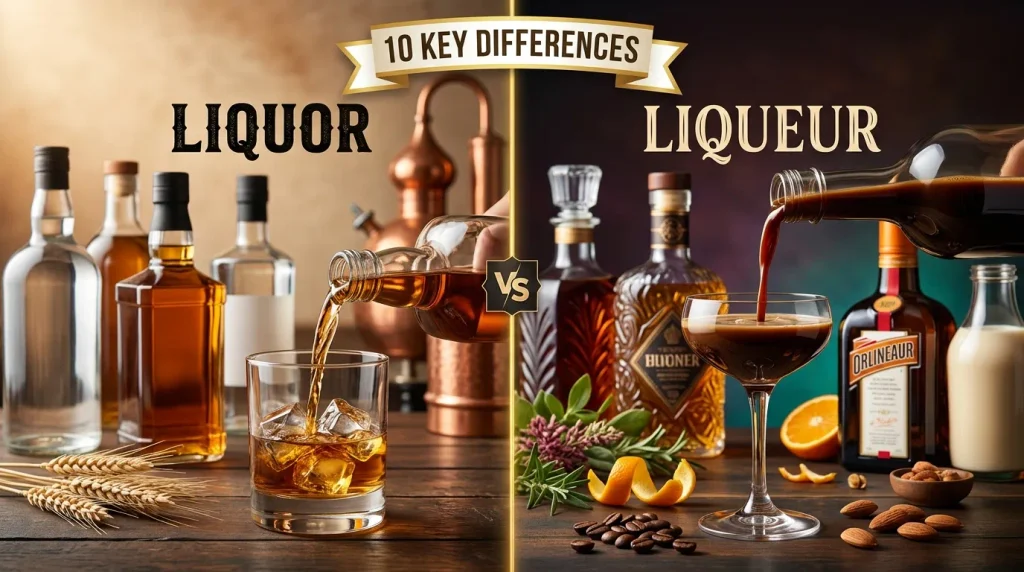
1. Meaning
Liquor refers to distilled alcoholic drinks. Liqueur refers to spirits with added sweeteners and flavorings.
- Liquor example: Vodka is a common spirit.
- Liqueur example: Coffee liqueur has a sweet coffee flavor.
2. Sweetness
Ordinary, unflavored spirits are usually less sweet than liqueurs. Liqueurs have added sweeteners, although their sweetness levels vary.
- Liquor example: Plain gin usually has little sweetness.
- Liqueur example: Amaretto often has a sweet almond-like flavor.
3. Flavor
Liquor has flavors that come from its ingredients and production. Liqueurs have added flavors from ingredients such as fruit, herbs, nuts, and coffee.
- Liquor example: Whiskey may have smoky or woody notes.
- Liqueur example: Orange liqueur adds a citrus taste.
4. Alcohol Content
Many common spirits have a higher alcohol concentration than many liqueurs. However, their alcohol levels can overlap.
- Liquor example: A bottle of vodka may contain 40% alcohol by volume (ABV).
- Liqueur example: A bottle of coffee liqueur may contain 20% ABV.
5. Production
Liquor is made by distilling a fermented liquid. Liqueurs are generally made by adding flavorings and sweeteners to a spirit, though production methods vary.
- Liquor example: Whiskey is distilled from a fermented grain mixture.
- Liqueur example: Fruit liqueur may be made using fruit extracts or infused fruit.
6. Main Use
Liquor often provides the main alcoholic base of a cocktail. Liqueur often adds sweetness and a special flavor.
- Liquor example: Gin is a key ingredient in a gin and tonic.
- Liqueur example: Orange liqueur adds citrus flavor to a margarita.
7. Texture
Many ordinary spirits are thin and watery. Some liqueurs are thicker because of their sugar or other ingredients, but not all liqueurs are syrupy.
- Liquor example: Plain vodka usually has a thin texture.
- Liqueur example: Cream liqueur often has a rich texture.
8. Types
Liquor includes several major spirit types. Liqueurs can be grouped by their main flavors or ingredients.
- Liquor example: Rum is a type of spirit.
- Liqueur example: Coffee liqueur is grouped by its main flavor.
9. Flavor Variations
Liquor can also be flavored. A flavored spirit does not automatically become a liqueur; its ingredients and product classification matter.
- Liquor example: Flavored vodka may have a fruit taste.
- Liqueur example: A sweetened fruit liqueur combines fruit flavor with added sweeteners.
10. Serving Style
Both liquor and liqueur can be served alone or mixed into drinks. Their best use depends on the product and recipe.
- Liquor example: Whiskey may be served neat or over ice.
- Liqueur example: Irish cream liqueur may be served chilled or added to coffee.
Get more about https://orchoice.com/commission-or-comission/
Comparison Table: Liquor vs. Liqueur
| Feature | Liquor | Liqueur |
| Meaning | Distilled alcoholic drink | Sweetened and flavored spirit |
| Examples | Vodka, gin, rum, whiskey | Amaretto, coffee liqueur, orange liqueur |
| Sweetness | Usually low in plain spirits | Sweeteners are added |
| Flavor | Comes from ingredients and production | Includes added flavorings |
| Alcohol level | Often higher, but varies | Often lower, but can overlap |
| Texture | Usually thin | Can be thin, creamy, or syrupy |
| Main cocktail role | Often provides the base | Often adds flavor and sweetness |
| Production | Made by distillation | Generally made by flavoring and sweetening a spirit |
Types of Liquor
Liquor includes many kinds of distilled drinks. Here are six common types.
- Vodka: Usually has a mild flavor and works in many cocktails.
- Gin: Often has a strong juniper and herbal flavor.
- Rum: Is made from sugarcane products, such as molasses or sugarcane juice.
- Tequila: Is made from blue agave and produced in designated areas of Mexico.
- Whiskey: Is made from fermented grain mixtures and may be aged in wooden barrels.
- Brandy: Is usually distilled from wine or other fermented fruit products.
Types of Liqueur
Liqueurs come in many flavors. These are some common groups and examples.
- Fruit liqueurs: These include Chambord and crème de cassis.
- Orange liqueurs: These include Cointreau and Grand Marnier.
- Coffee liqueurs: Kahlúa is a well-known example.
- Nut liqueurs: Amaretto and Frangelico are common examples.
- Cream liqueurs: Irish cream is a popular type.
- Herbal liqueurs: Chartreuse and Bénédictine are examples.
- Chocolate liqueurs: These have chocolate or cocoa flavors.
- Mint liqueurs: Crème de menthe is a well-known example.
How Liquor and Liqueur Are Used in Cocktails
Liquor and liqueur can work together in one drink. Each ingredient can bring something different.
For example, a margarita often contains tequila, lime juice, and orange liqueur. Tequila provides the main spirit, while the orange liqueur adds sweetness and citrus flavor.
Liqueurs can also be added to coffee or desserts. Some are served alone, while others are used in small amounts to change a drink’s flavor.
A useful tip: When adding liqueur to a recipe, consider its sweetness. You may need less extra sugar or syrup. Always follow the recipe and check the alcohol content of each product.
Common Mistakes When Using Liquor and Liqueur
Mistake 1: Thinking the Words Mean the Same Thing
The words are similar, but their meanings are different.
- Incorrect: “Coffee liquor” when you mean a sweetened coffee liqueur.
- Correct: “Coffee liqueur adds flavor to the drink.”
Mistake 2: Thinking Every Liqueur Has Less Alcohol
Many liqueurs have less alcohol than common spirits, but this is not always true.
- Incorrect: “Every liqueur has less alcohol than every liquor.”
- Correct: “Alcohol content varies by product.”
Mistake 3: Thinking Liquor Is Always Unflavored
Some spirits have added flavors. A flavored spirit is not automatically a liqueur.
- Incorrect: “Any flavored spirit is a liqueur.”
- Correct: “The product’s ingredients and classification help determine its type.”
Mistake 4: Thinking Every Liqueur Is Thick
Some liqueurs are creamy or syrupy, while others are thin.
- Incorrect: “All liqueurs have a thick texture.”
- Correct: “Liqueur texture depends on its ingredients and production.”
Mistake 5: Confusing Liquor With Beer and Wine
In common US usage, liquor usually refers to distilled drinks. Beer and wine are generally classified separately.
- Incorrect: “Wine is a type of liquor.”
- Correct: “Wine is an alcoholic drink, but it is not usually called liquor.”
British and American English
In American English, liquor commonly refers to distilled alcoholic drinks. The word spirits is also widely used.
In British English, spirits is common when talking about distilled drinks, though liquor is also understood. The word liqueur has the same general meaning in both varieties of English.
Remember that usage can vary by context. If you are writing for a broad audience, define the words clearly the first time you use them.
A Brief History of Liqueur
The word liqueur is linked to the French word liqueur and the Latin liquor, meaning liquid. The Latin verb liquefacere means “to make liquid” and is often connected to the word’s history.
Sweetened and flavored spirits have a long history. Different regions developed their own recipes using local fruits, herbs, spices, and other ingredients. Today, liqueurs are used in cocktails, desserts, and other recipes around the world.
Liquor or Liqueur: Which Word Should You Use?
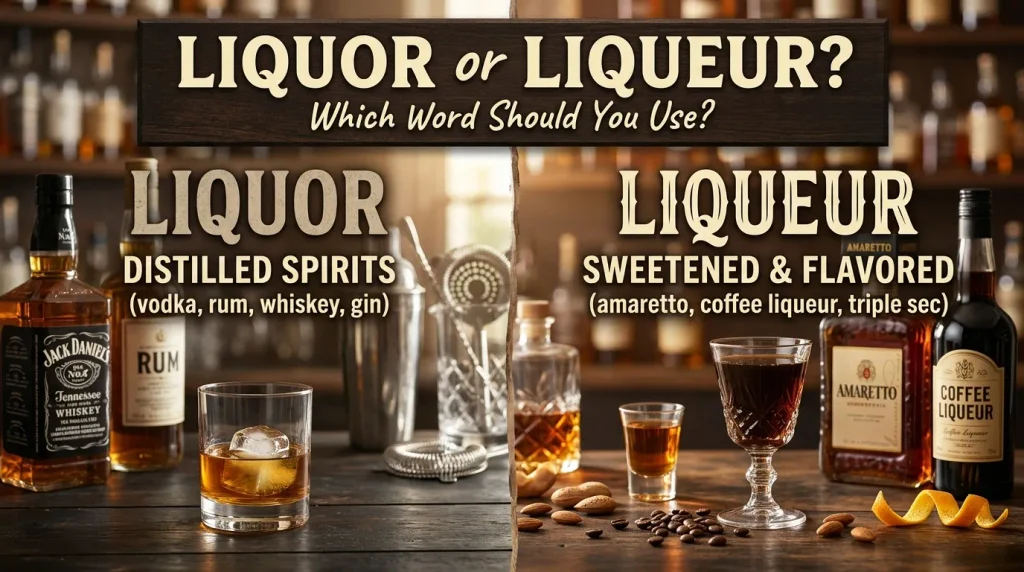
Choose the word based on the drink you mean.
- Use liquor for a distilled spirit such as vodka, rum, or whiskey.
- Use liqueur for a sweetened and flavored spirit such as amaretto or coffee liqueur.
If you are unsure, check the bottle label and the product description. Do not rely only on its color, thickness, or alcohol content.
Queries About Liqueur or Liquor
1. Is liqueur the same as liquor?
No. Liquor is a broad term for distilled alcoholic drinks. Liqueur is a sweetened and flavored type of spirit.
2. Is liqueur a type of liquor?
Yes. Liqueur is generally considered a type of spirit or liquor, but not every liquor is a liqueur.
3. Which has more alcohol, liquor or liqueur?
Many common liquors have more alcohol than many liqueurs. However, the ranges overlap. Check the ABV on the bottle.
4. Is vodka a liquor or a liqueur?
Plain vodka is a liquor. Flavored vodka is still commonly classified as a spirit, depending on the product.
5. Is Baileys a liquor or a liqueur?
Baileys Irish Cream is a cream liqueur. It contains cream and other flavoring ingredients.
6. Is Cointreau a liquor or a liqueur?
Cointreau is an orange liqueur. It adds citrus flavor and sweetness to many cocktails.
7. Can you drink liqueur on its own?
Yes. Some liqueurs are served neat, chilled, or over ice. Others are mainly used in cocktails or desserts.
8. Why are liquor and liqueur spelled so similarly?
The words are historically related to the idea of liquid. Their similar spelling can make them confusing, but they refer to different categories of drinks.
Conclusion
Liquor and liqueur are related, but they are not interchangeable. Liquor is a broad term for distilled alcoholic drinks such as vodka, gin, rum, and whiskey, while liqueur is a spirit with added sweeteners and flavorings. The easiest way to remember the difference is to think about each drink’s role. Liquor often provides the main spirit in a cocktail, while liqueur often adds sweetness and flavor. However, alcohol content, texture, and flavor can vary, so they do not define every product on their own. Learning these differences helps you choose the right word, understand drink recipes, and avoid common mistakes.

I’m Samia Jamshaid, an English language specialist, SEO specialist, digital publisher, and researcher. I create clear, accurate, and well-researched content on English grammar, vocabulary, word meanings, and language comparisons, helping readers understand and use English with confidence.



1 thought on “Liqueur or Liquor: Types, Flavors, and Examples 2026”